Custom Jazz Song: How to Get a Personalized Jazz Track Made

Editorial Team
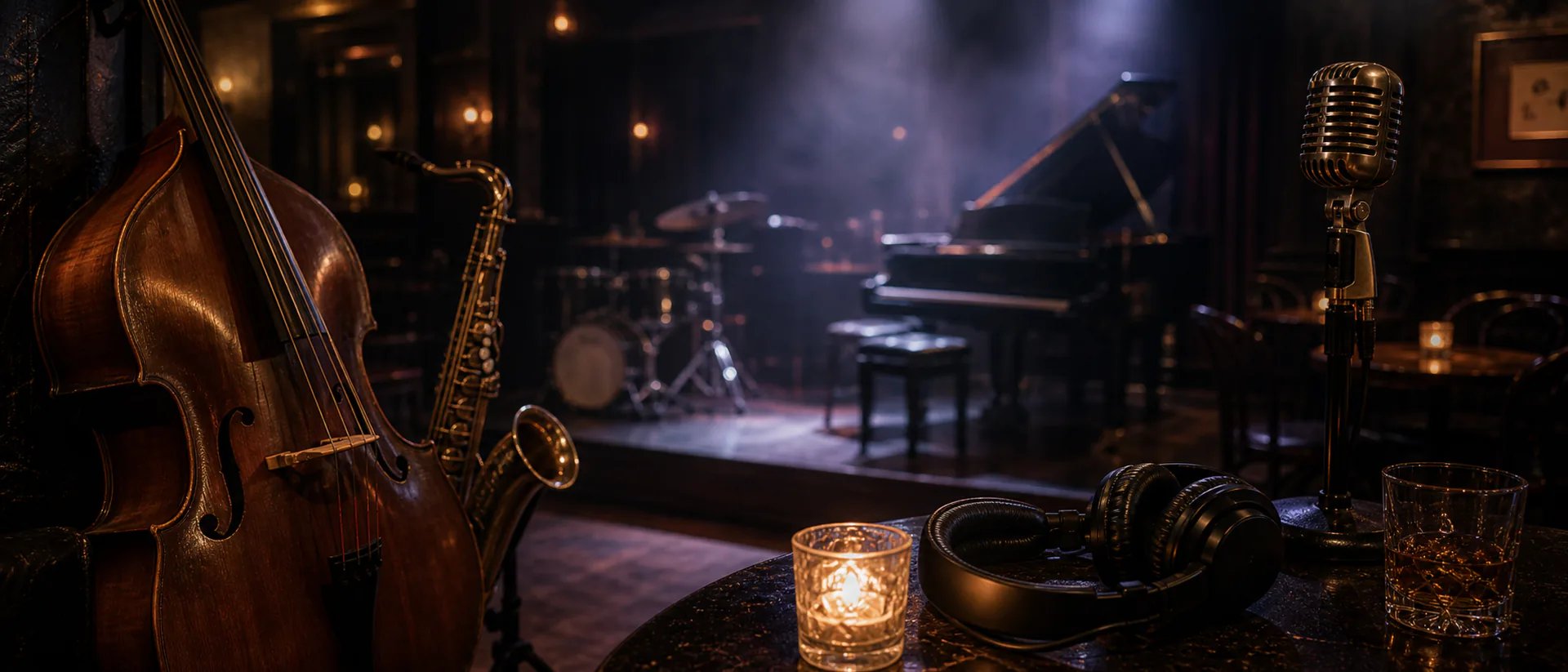
Swing, ballad or bossa, and a vocal that sits back on the beat. How to brief a jazz arrangement and what works as a lyric in this style of music.
Create a custom song for someone special
Share the story, pick the style, and turn your memories into a one-of-a-kind song.
Quick answer: A custom jazz song is an original jazz track built from a written brief about one person, usually 3:00 to 4:30 long and set between 60 and 140 BPM depending on whether the arrangement is a ballad or a swing number. People order one for a milestone anniversary, a first dance, or a retirement send-off.
Most genres put a date stamp on themselves. A pop track made in 2026 will sound like 2026 by the end of the decade, and everyone in the room will hear it. Jazz does not age that way, which is why it keeps turning up at 50th anniversaries, at first dances, and at send-offs for people whose taste was formed long before streaming existed.
When is jazz the right choice?
When the recipient is older than the trend cycle and the occasion is meant to be replayed for years. Jazz suits people who already have the genre somewhere in their rotation, and it suits moments that are formal enough to carry a slower tempo without feeling flat.
Strongest fits:
- Milestone anniversaries — 10, 25 and 50 years, where a trend-driven arrangement would feel wrong
- Weddings — couples who want timeless instead of current, especially for a first dance
- Proposals — a ballad in a quiet restaurant does more work than a full production
- Tributes to parents, grandparents or a longtime mentor who grew up with the genre
- Memorial tributes for someone who actually listened to it
- Retirement send-offs for a manager or teacher with 20-plus years behind them
- Valentine's dinners and any evening built around low light and a slow room
Jazz has never been a volume genre — the yearly recorded-music figures published by IFPI are dominated by pop and hip-hop — but a gift is a market of one, and market share tells you nothing about whether it fits your recipient.
Which jazz sub-style should you pick?
Name one in the brief, because "jazz" covers everything from a solo piano ballad to a 17-piece horn section. The six below cover almost every request, and the tempo you choose changes the result more than any other single line.
| Sub-style | Reference artists | Typical BPM | Best for |
|---|---|---|---|
| Standards ballad | Ella Fitzgerald, Frank Sinatra, Nat King Cole | 60–80 | Weddings, anniversaries, most tributes |
| Bossa nova / Latin jazz | Stan Getz, Astrud Gilberto, João Gilberto | 80–110 | Romantic moments, intimate rooms |
| Modern vocal jazz | Norah Jones, Diana Krall, Michael Bublé | 75–100 | Recipients under 50, general use |
| Big band / swing | Count Basie, Glenn Miller | 110–140 | Dance floors, celebratory send-offs |
| Smooth jazz | Sax-led, light or no vocal | 85–110 | Background music for dinners and events |
| Vocal jazz with strings | Billie Holiday, Tony Bennett | 60–75 | Vow renewals, milestone birthdays, memorials |
The standards catalogue these arrangements borrow from is old enough to be archival: much of the American song tradition behind it sits in the Songs of America collection at the Library of Congress. If you cannot choose a row, send one reference track instead — a single named song settles tempo, instrumentation and vocal weight at once.
What makes a strong jazz brief?
Pictures, not adjectives. Jazz lyrics work in rooms, evenings, drives and specific tables, so a brief made of compliments gives the arrangement nothing to hold.
- The reference artist or era. "Like Sinatra in the '50s." "Like Norah Jones."
- One central image or scene. A kitchen at midnight. A corner table. The drive home from the airport.
- The emotional register. Tender, wistful, celebratory, or slow-burn.
- Vocal preference. Male crooner, female lead, or instrumental only.
- Tempo. Ballad pace at 60–80 BPM, or swing at 110–140 BPM.
- Names and details. Jazz rewards poetic specificity — a year, a city, a season.
The full framework, including what to leave out, is in how to write a custom song brief.
How long should a jazz track run?
Three to four and a half minutes, at the longer end of what most genres need, because the arrangement wants instrumental space. Cut it to 2:30 and you lose the solo section, which is often the part people replay.
- Tempo: 60–90 BPM for ballads, 110–140 BPM for swing
- Length: 3:00–4:30
- Structure: often AABA standard form rather than verse-chorus
- Instrumentation: piano, upright bass, drums, plus optional horns or strings
- Vocal: solo lead with intimate dynamics
Where do people actually use jazz songs?
At the formal moments, and at the quiet ones. The six below account for most jazz briefs that come through, and they share one trait: someone is listening on purpose rather than in passing.
- A first dance at a wedding where the room is dressed up
- A vow renewal at a 25th or 50th anniversary
- A proposal played in a restaurant or a hotel suite
- A memorial gathering for someone who lived with the genre
- A retirement send-off for a long-tenured manager, teacher or founder
- An anniversary surprise pressed to vinyl and handed over in person
What does a custom jazz song cost?
Roughly $150 to $500 and up for most jazz briefs, which puts it in the mid-to-premium range rather than the entry tier. The reason is arrangement density: piano, upright bass, drums and an optional horn or string section are more production steps than a guitar-and-voice track.
Tier-by-tier numbers are in what a custom song costs, and you can compare what each song package includes before you decide where to spend. For how the whole thing fits together — brief, lyric draft, revision, delivery — start with the complete guide to custom songs.
What should you say when you order?
Eight lines, plain facts. Paste this into the order form and fill the blanks — this shape is specific to a jazz recipient, where the era and the central image matter more than any adjective you could use.
For: [name], my [relationship], [age or years known]. Occasion: [event], needed by [date]. Era or reference: [Sinatra in the '50s / bossa like João Gilberto / modern like Diana Krall]. Central image: [the corner table, the drive home, the kitchen at midnight, a city and a year]. Register: [tender / wistful / celebratory / slow-burn]. Sub-style and tempo: [standards ballad at 70 BPM, or big band swing at 130 BPM]. Vocal: [male crooner / female lead / instrumental only]. Leave out: [names, topics, anything off limits].
Two rules specific to this genre. Give the emotional target before any musical instruction — celebration, tenderness, confidence, nostalgia, humor, loyalty — because tempo follows feeling and not the other way around. And name where the track will be heard: a song played through headphones on a quiet evening can stay slow and sparse, while one played over dinner conversation needs a clearer melody and a faster arrival. Restraint helps here. Two or three reference artists point the direction; trying to specify every chord and fill only boxes the arrangement into a formula.
Frequently asked questions
Will it sound like a finished jazz record?
It is produced as a finished mix, not a demo — full arrangement, balanced instruments, a lead vocal sitting where a jazz vocal usually sits. The track itself is produced from your written brief, and the brief and the lyric are written and reviewed by people before anything is produced. Ask for the sub-style by name and the mix follows it.
Can it sound like a specific era?
Yes, and era is one of the most useful lines in the whole brief. Say '50s standards, '60s bossa, '90s neo-jazz or contemporary, and the arrangement, instrumentation and vocal treatment all shift together. Naming one artist from that era is even better than naming the decade, because it settles phrasing and tempo in the same breath.
Can the track be instrumental only?
Yes. Say it explicitly in the brief and give the melody something to carry — usually a saxophone or piano lead. Instrumental jazz is the safer pick when the song will play under conversation at a dinner, a reception or a gathering, since lyrics compete with people talking. If you want both, order the vocal version and ask for an instrumental cut too.
Will it work as background music for an event?
Smooth jazz and standards ballads scale well as ambient music for dinners, cocktail hours and receptions, mostly because the tempo and dynamics stay even. Keep the arrangement sparse, avoid a big final chorus, and pick the 60–90 BPM range. If the song also has to be listened to at some point in the evening, plan for one moment where the room actually stops.
Can the lyrics be in another language?
Yes. Jazz travels unusually well: Portuguese suits bossa, French suits chanson-style ballads, and Italian suits the standards repertoire. Write the brief in whatever language you think in, then state the output language on its own line. If names or places should keep their original pronunciation, spell that out phonetically — that one detail prevents most rework.
Who owns the finished track?
The rights you receive come from the service's terms at checkout, and they vary — personal use is standard, while commercial or broadcast use often is not. Read that section before you plan anything public, and confirm in writing if the song will play at a ticketed event. The WIPO overview of copyright explains what the underlying rights cover.
Related reading: blues when the story has rough edges, a personalized instrumental piece with an orchestral scale, and R&B for a younger recipient.
Ready to commission yours? Start your custom jazz song here — bring the era, the mood and one specific evening, and the rest follows from there.
About the Author
HosannaSong Team
The HosannaSong team helps people turn meaningful stories into custom songs. We write about personalized music, songwriting, and the craft of giving a track that lasts.
View ProfileCustom Country Song: How to Get a Personalized Country Track
Custom Blues Song: How to Get a Personalized Blues Track Made
Related Articles
Custom Blues Song: How to Get a Personalized Blues Track Made
Read Article
Custom Classical Song: How to Get a Personalized Piece Composed
Read Article
Custom R&B Song: How to Get a Personalized R&B Track Made
Read ArticleTurn this story into a custom song.
Answer a short brief, choose the style, and get a personalized song made to move the person you love. Start while the memories are still fresh.
Create My Song Now