Custom Lullaby: How to Get a Personalized Lullaby for Your Baby

Editorial Team
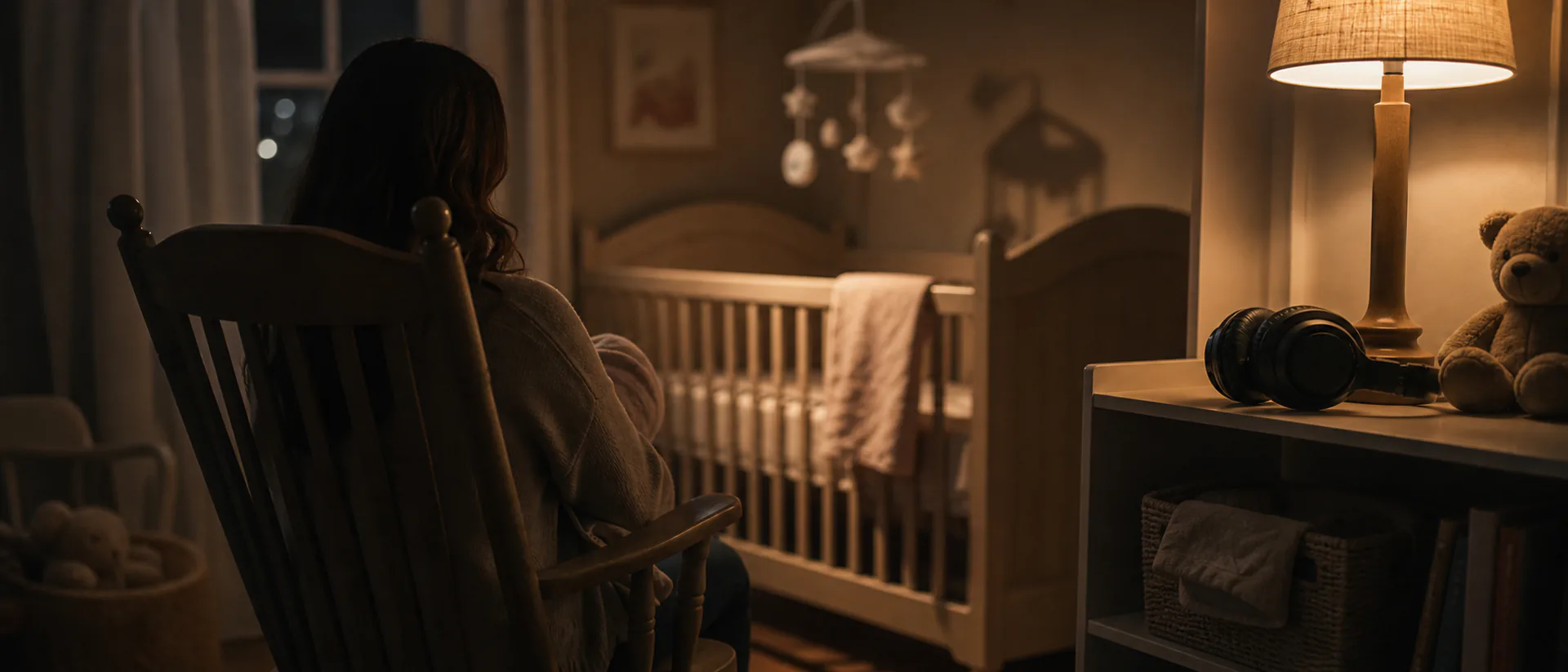
A lullaby with your baby's name, at a sleep-friendly tempo. What to put in the brief, which voice and style to pick, and how to use it in a bedtime routine.
Create a custom song for someone special
Share the story, pick the style, and turn your memories into a one-of-a-kind song.
Quick answer: A custom lullaby is an original track built from a brief you write — the baby's name, a few family details, the style and tempo you want. Most run 90 seconds to 2 minutes at 60–75 BPM, and delivery takes 1 to 5 days. Parents play it at the same point in the bedtime routine every night.
This article is about music and bedtime routines, not medical advice — take questions about infant sleep, feeding or health to your pediatrician, and if you or someone close to you is struggling, call or text 988 (Suicide & Crisis Lifeline).
Almost every baby gift gets outgrown. Onesies last six weeks, the toys get replaced, the expensive monitor ends up in a closet by the second year. A song has no size and no expiry date, which is why a lullaby with the baby's name in it tends to survive the whole nursery. Here is what a custom lullaby actually is, what to put in the brief, and what it has to sound like to be useful at two in the morning.
Why does a lullaby outlast other baby gifts?
Because it gets used every night instead of once. The same two-minute track can run for the first two or three years of bedtimes, then come back as the song the four-year-old asks for by name.
It also plugs into the one part of the day pediatricians keep telling parents to protect: a short, predictable wind-down. The American Academy of Pediatrics parenting site frames bedtime as a repeated sequence — bath, pajamas, book, lights down. A custom lullaby is the piece of that sequence that never changes, because it is the only one you own outright.
What does a custom lullaby include?
Five things by default: the name in the lyrics, one specific detail from your story, a style you choose, a soft vocal, and a slow tempo. Everything past that is negotiable.
- The baby's name sung in the lyrics, usually in the chorus
- At least one concrete detail — where the baby was born, how long the wait was, who the name came from, what the older sibling calls them
- A style you pick — acoustic folk, music-box strings, gentle pop, a soft choral pad, or a hybrid
- A vocal that fits a sleeping room — quiet dynamics, no belted notes, no jarring transitions
- Tempo between 60 and 75 BPM — slow enough to settle a fussy baby, steady enough not to drag
The lyrics and audio are produced from the brief you write, and the result is reviewed before it reaches you. The story is yours, and every personal detail should trace back to what you shared.
When do people order a custom lullaby?
Most orders cluster around eight moments, and roughly half of them are gifts rather than self-purchases. The list, in the order they usually show up:
- Baby shower — the track plays while gifts are opened. See the song to play at a baby shower.
- Announcement day — the song becomes part of how the family tells the news.
- Adoption finalization — the wait is the story, and it writes itself into the lyric.
- Coming home from the hospital — played the first night in the crib.
- First birthday — when a family wants something less disposable than another stuffed animal. See the track made for a first birthday.
- A gift from grandparents — especially grandparents who live far away and want to be in the room somehow.
- NICU discharge — for babies who arrived early or had a hard start.
- Remembering a baby who died — a quiet keepsake, briefed with extra care and no pressure to be cheerful.
Which lullaby style fits your family?
Pick the one closest to what you already listen to, not the one that sounds most like a nursery. Six options cover almost everyone:
- Acoustic folk — guitar, one soft voice, nothing else. The safe default if you cannot decide.
- Music box and soft strings — harp, celesta, piano. Reads as fairy tale, pairs well with a vintage nursery.
- Gentle pop — contemporary and warm, closer to a Norah Jones or Ed Sheeran ballad than to a nursery rhyme.
- Choral pad — voices layered like a small cathedral choir, no drums. Slowest of the set.
- Bilingual — a Spanish first verse into an English chorus, a Portuguese phrase as the closing line, whatever mirrors how the household actually talks.
- Loop hybrid — one sung pass, then the same arrangement instrumental, built to repeat for a full nap.
What tempo and length actually help sleep?
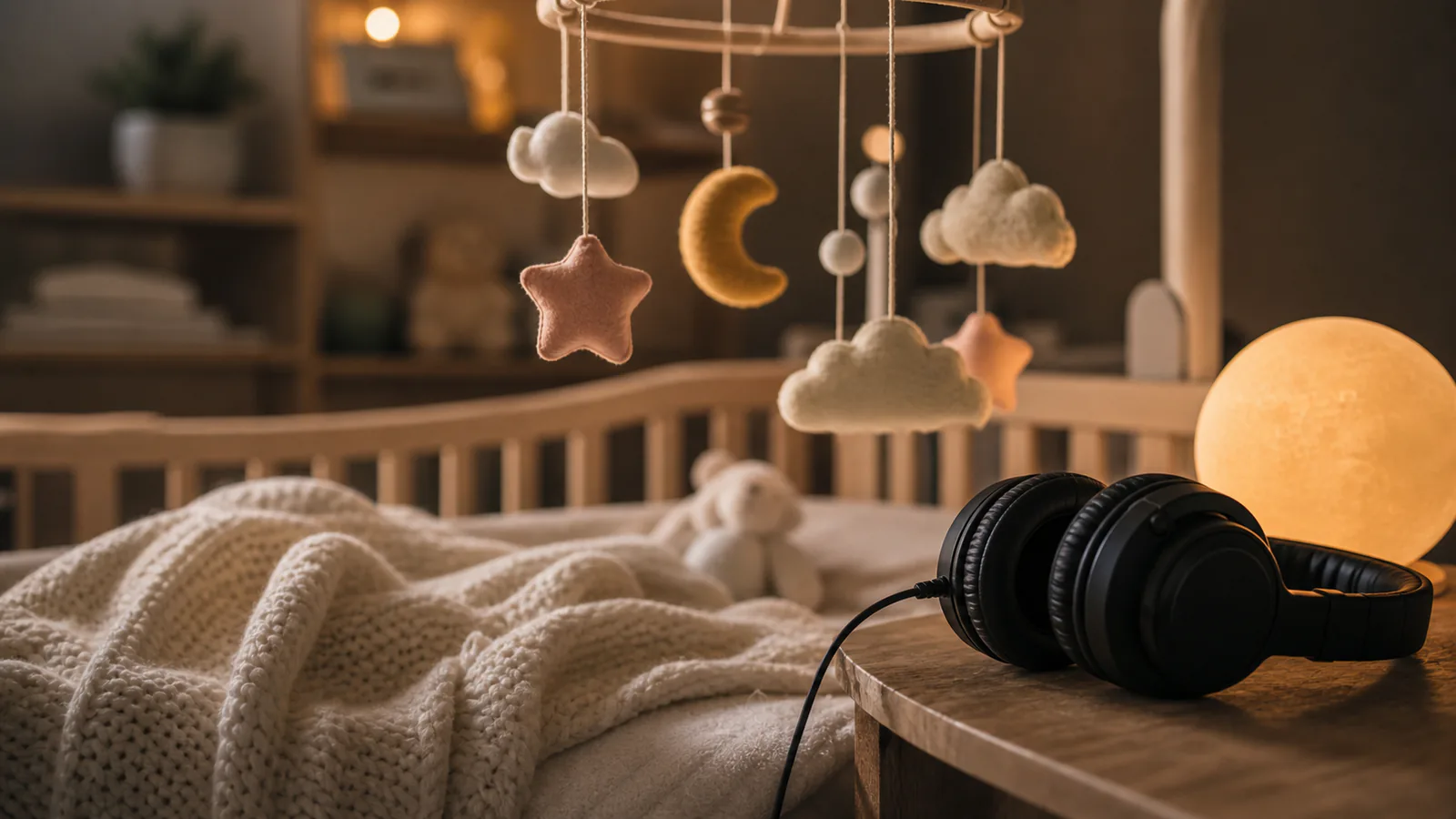
Slow and short: 60–75 BPM, 90 seconds to 2 minutes, soft the whole way through. Slow-tempo music is the profile most commonly used for winding down, which the Sleep Foundation's review of music and sleep describes in detail.
Four specs worth writing into the brief:
- Length: 90 seconds to 2 minutes. Long enough to settle into, short enough to loop without the structure calling attention to itself.
- Tempo: 60–75 BPM, roughly the rate of a resting heartbeat.
- Dynamics: flat and quiet. No big chorus lift, no key change, no drum entrance halfway through.
- Loop point: the end should return to the start without a bump, because it will be played on repeat.
None of that is a sleep treatment — it is a consistent cue inside a routine, and the value comes from the repetition, which is the same principle behind the wind-down habits described in the NHS guidance on sleep problems. If the version you get breaks these specs, ask for a revision; a lullaby has technical requirements a straightforward ballad does not.
How do families use the song later?
The track usually outlives the reason it was ordered. The patterns we see most often:
- Bedtime, every night, for the first 18 to 36 months
- Car naps, on repeat for long drives
- The first night home, played once, deliberately
- Birthdays, replayed each year as a running family joke that stops being a joke
- Ages 3 and up, when the child starts requesting it and you may want a second, more playful song written for an older child
If bedtime is the whole reason you are here, the format is built out in full on our page for baby sleep tracks.
What does a custom lullaby cost?
Between roughly $30 and $200 for almost every order, and the tier mostly buys revisions and speed rather than a different song. Deeper detail on the market sits in the breakdown of what a personalized track costs.
| Tier | Typical price | Revisions | Turnaround |
|---|---|---|---|
| Entry | $30–$80 | 1 | 1–3 days |
| Mid | $80–$200 | 2–3 | 2–5 days |
| Premium | $200+ | 3 or more | 5–10 days |
| Rush add-on | +$20–$50 | unchanged | about 24 hours |
Entry tier is fine for a shower gift you decided on last night. Mid tier is the common choice when the lullaby is meant to be kept, because two revision rounds is usually what a name pronunciation fix plus a tempo fix costs you.
What should you say in the brief?
Answer nine things, in plain sentences, no poetry required. Three or four specific anchors already beat a long, vague paragraph — the general rules are in the guide to writing a brief that gets the song right.
- The baby's full name and how it is pronounced. Write it phonetically: "Siena — see-EH-na." This matters more than anything else in the brief.
- Where the name came from. A grandparent, a place, a word in another language.
- The parents' names, in whatever configuration the family has.
- Siblings' names, and what they call the baby.
- Birth date and city, or the due date if the baby is not here yet.
- The road to this baby. IVF, adoption, a surprise, a long wait — only what you want said out loud.
- The feeling. Calm, playful, proud, relieved. Pick one word, not four.
- What to leave out. Weight, hospital details, anything the parents would not want sung.
- One reference track, so the arrangement has a target instead of a guess.
Frequently asked questions
How early can you order a lullaby?
Any time, including during pregnancy. If the name is decided, it goes straight into the chorus. If it is not, the brief can use a placeholder — "the baby," a nickname, the family surname — and the name gets added after the birth as a revision, which is why buying a tier with at least two revision rounds is smart when you order early.
Can a lullaby be in two languages?
Yes, and it is one of the most common requests in bilingual households. The usual shape is one language for the verses and the other for the chorus, or a repeated closing phrase in the grandparents' language. Say which language should carry the name, because that is the line the baby will recognize first, and write out any pronunciation that could be read incorrectly.
Will the song work as a bedtime cue?
It can, and the mechanism is repetition rather than the music itself: play the same track at the same point in the routine and it starts marking the transition. That is a habit, not a treatment, and no song fixes a sleep problem. Broader context on how music is studied in health settings is summarized in the NIH overview of music and health.
Can grandparents order it as a surprise?
Yes, and it is one of the most frequent gift formats for this song. You write the brief from what you know — the name, the wait, the story you were told — and choose whether the file goes to the parents directly or comes back to you first so you can play it in person. Ask a sibling or partner for the pronunciation detail before ordering; it is the one thing a surprise usually gets wrong.
What if the situation is difficult?
Say so in the brief, plainly. Lullabies get ordered for NICU stays, for babies with a diagnosis, and for parents who lost a baby, and the difference is entirely in what you ask for: name the thing you want acknowledged, and name the thing that should stay unsaid. A restrained, short track is almost always the right call in these orders.
Related reading: how personalized music works from start to finish and the complete guide to custom songs, if you want the wider process before you commit to a style.
Ready to make one? Start your lullaby brief here — it takes about ten minutes, and the name is the only part you cannot get wrong.
About the Author
HosannaSong Team
The HosannaSong team helps people turn meaningful stories into custom songs. We write about personalized music, songwriting, and the craft of giving a track that lasts.
View ProfileCustom Song for Kids: A Personalized Track Made for Your Child
Custom Baby Shower Song: A Personalized Track for the Mom-to-Be
Related Articles

Custom First Birthday Song: A Personalized Track for Year One
Read Article
Custom Song for Kids: A Personalized Track Made for Your Child
Read Article
Custom Baby Shower Song: A Personalized Track for the Mom-to-Be
Read ArticleTurn this story into a custom song.
Answer a short brief, choose the style, and get a personalized song made to move the person you love. Start while the memories are still fresh.
Create My Song Now