Custom Pop Song: How to Get a Personalized Pop Track Made

Editorial Team

What a pop production needs to sound current, how the hook is built around your story, and what to send so the vocal fits the person you gift it to.
Create a custom song for someone special
Share the story, pick the style, and turn your memories into a one-of-a-kind song.
Quick answer: A custom pop song is an original pop track produced from a brief you fill in: recipient, occasion, sub-style and one reference artist. Typical runtime is 2:30 to 3:30 at 80 to 110 BPM, entry versions start around $30, and the file arrives in 24 to 72 hours, in time to play at a birthday dinner.
You have nine days, one recipient and no real idea what they listen to. Their playlist is Top 40, three throwbacks and whatever the algorithm served last Tuesday. Pop is the answer to that specific problem — not because it is the best genre, but because it is the one least likely to be wrong.
Why is pop the safest genre choice?
Because it has the widest emotional range of any commercial format and the most familiar structure. The same arrangement can be tender, triumphant, nostalgic or playful without changing a single instrument, which means it can carry almost any story you hand it.
Three practical reasons it holds up:
- Recognizable structure. Verse–chorus–verse–chorus–bridge–chorus. The listener settles into it in the first fifteen seconds, which is exactly when the lyrics need to be heard.
- Wide vocal palette. Bright or husky, high or low, smooth or rough — the vocal character is a setting in the brief, not a constraint of the genre.
- It plays anywhere. A wedding, a car, headphones at the gym, a kitchen on a Sunday, a farewell in a meeting room. Pop is the one genre that rarely feels out of place in the room it gets played in.
That reach is not a matter of taste. Pop is the dominant commercial format in nearly every major market, as tracked in the IFPI global industry data — which is why it is the format most recipients already have ears trained for. For how it compares with every other genre on the menu, start from the complete guide to commissioned tracks.
When is a pop track the right call?
When you know the occasion better than you know the person's taste. Pop is the default for celebratory moments and the safe landing when the recipient's listening habits are a mystery to you.
The clearest signals:
- Their day-to-day playlist is mostly Top 40, modern pop or singer-songwriter pop
- The occasion is broadly celebratory, not specifically vintage, country or formal
- You want something they will play in mixed company without thinking about it
- You are choosing for someone whose taste you genuinely do not know
- The track will be played out loud in a room rather than through headphones
Occasions where pop wins by default: birthdays, anniversaries, Valentine's Day, a proposal, a friendship milestone, a team send-off. Where it tends to lose: a memorial, a formal ceremony, or a recipient whose entire listening life happens in one specific decade.
Which pop sub-style should you pick?
"Pop" is a category, not a setting, so the brief has to narrow it. Pick one of five sub-styles and the tempo, instrumentation and vocal weight are decided in a single line.
| Sub-style | Typical BPM | Typical length | Best for |
|---|---|---|---|
| Pop ballad | 60–80 | 3:00–3:30 | Romantic and emotional moments, headphones |
| Upbeat pop | 80–110 | 2:30–3:00 | Parties, celebrations, played out loud |
| Indie / acoustic pop | 70–90 | 2:45–3:15 | Quiet, one-to-one moments, older recipients |
| Pop-rock | 95–125 | 2:45–3:15 | Energy without going full rock |
| Synth-pop | 100–120 | 2:30–3:00 | Recipients under 35, proposals |
For reference points: the ballad row is Adele and Lewis Capaldi territory, upbeat pop is Taylor Swift and Bruno Mars, indie pop is The Lumineers and early Ed Sheeran, pop-rock is P!nk and OneRepublic, synth-pop is Dua Lipa and The Weeknd. If the artists you would name lean toward groove-led, smooth vocal delivery, you are describing a track built on an R&B brief rather than a pop one, and the arrangement changes accordingly. And if you cannot pick a row, name one song the recipient already loves — a single reference track routes the brief better than three adjectives.
What tempo, length and structure work best?
The defaults are 80 to 110 BPM for upbeat pop, 60 to 80 BPM for ballads, and a runtime of 2:30 to 3:30. That length is long enough for two verses, a chorus and a bridge to land, and short enough that the recipient plays it again instead of skipping to the end.
The rest of the standard production spec:
- Structure: verse–chorus–verse–chorus–bridge–chorus
- Vocal: single lead, optional harmony layer on the final chorus
- Instrumentation: drums, bass, piano or acoustic guitar, optional synth pad
- Key detail placement: names and specific memories in the verses, one repeatable line in the chorus
- Delivery format: high-quality audio file, lyrics included
If you have a preference on any of these, the brief is where it goes. Leave a field blank and the default above is what you get.
How is a custom pop song made?
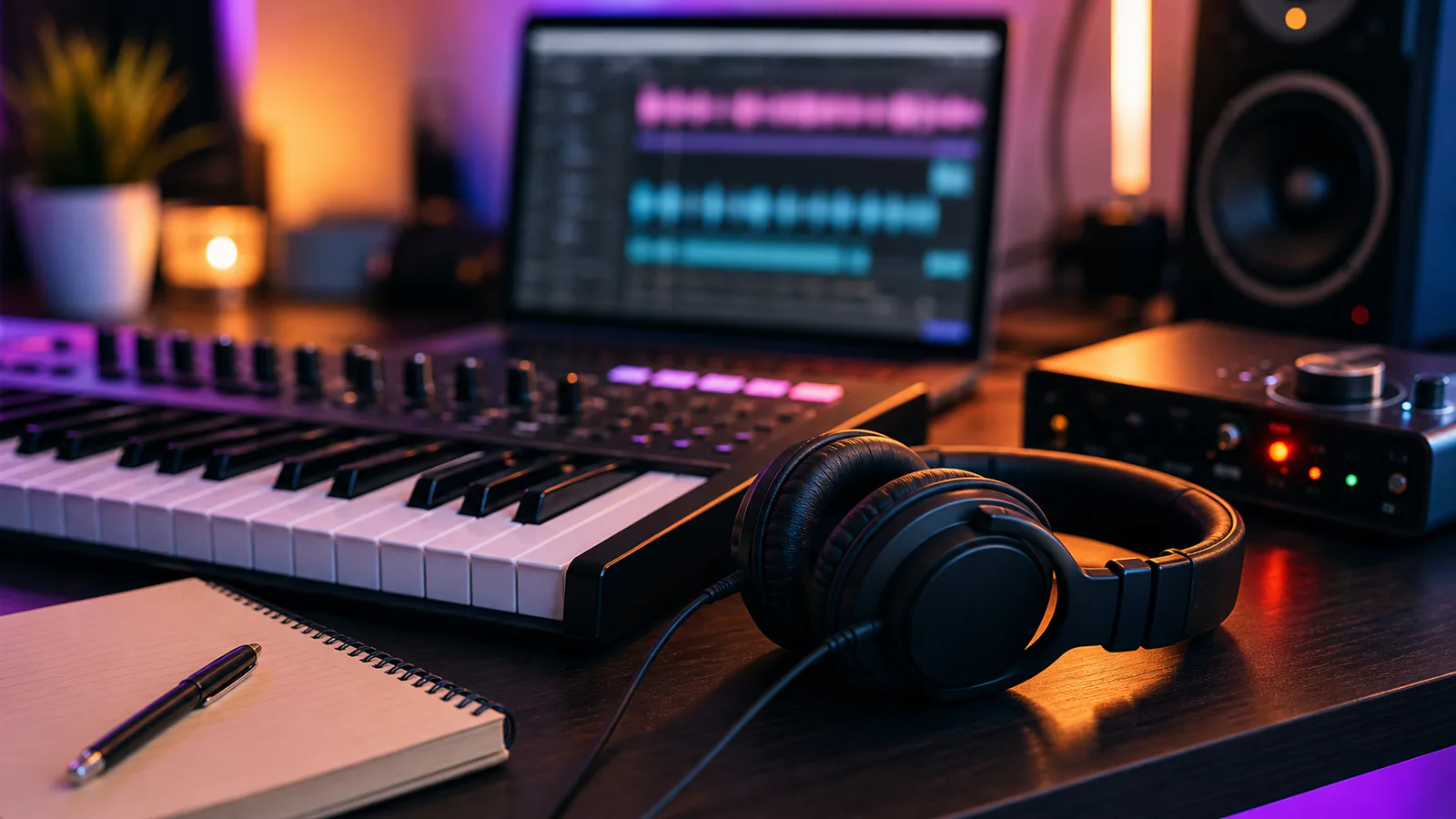
Four steps, and the first one is the only one that takes your time. You fill in a brief of about ten minutes, you get a lyric draft to approve before anything is produced, the track is built to the spec you chose, and the finished file is delivered.
- Brief — around 10 minutes, done in one sitting
- Lyric draft — you read it and request changes before production starts
- Production — the arrangement and the vocal are generated from the approved lyrics and the sub-style you picked
- Delivery — high-quality audio file plus the written lyrics
The composition and vocal are produced from your brief. What decides whether the song feels personal is the detail you provide, the lyric draft you approve, and the final review before the file reaches you.
Most pop orders sit in the $30 to $200 range, with entry-tier tracks arriving in 24 to 72 hours. The tier-by-tier breakdown is in what a commissioned track costs, and what each package actually includes is listed in full before you pay.
Where do people actually play these tracks?
Almost always out loud, and almost always at a moment somebody planned. The six configurations below cover the large majority of pop orders.
- First dance at a wedding — the most common single use, briefed months ahead
- Surprise birthday track played at dinner — Bluetooth speaker, no preamble
- Played as the question gets asked — proposal timing, usually the synth-pop or ballad row
- Anniversary card upgrade — instead of the card, a three-minute track for year five
- Long-distance send — no occasion at all, sent as a link on an ordinary Friday
- A send-off at the office or the last day of the school year — a team or a class as the subject, names in the verses
Writing a song for one specific occasion is not a modern invention. The Smithsonian Folkways recorded archive is full of tracks made for a single wedding, a single town or a single working crew — the format is old, the turnaround is what changed.
What should you put in the brief?
Five fields decide the outcome, and skipping any one of them is what produces a generic track. Write these out before you start:
- Their actual listening habits. Not what you wish they listened to — what is genuinely in their most-played list this year.
- One reference song. One, not three. A single track whose feel we should match tells the production more than a paragraph of description.
- The dominant emotion. Pick one: love, gratitude, longing, joy, hope, triumph. A song that tries to be all six lands as none of them.
- Three concrete details. A name, a place, an inside joke, a specific date. The chorus can stay broad; the verses are where specificity earns its keep.
- Vocal preference. Higher or lower, bright or husky, and whether you want a harmony layer on the last chorus.
- What to leave out. An old relationship, a sensitive chapter, the nickname they have started to hate. Boundaries are as useful as material.
The field-by-field version, including how much detail is too much, is in the guide to writing a brief.
Frequently asked questions
Can the recipient sing along?
Yes, and the standard structure is chosen partly for that reason. The written lyrics are delivered with the audio file, and a verse–chorus–bridge arrangement at 80 to 110 BPM is learnable after two or three plays. If you specifically want a track that a room can join in on, say so in the brief — the chorus can be built with a shorter, more repetitive line designed to be picked up quickly.
Can I choose a higher or lower vocal?
Yes. Vocal character is a field in the brief: register, weight and texture. If you leave it blank, the vocal is matched to the emotional tone of the lyrics — ballads tend toward a warmer, lower delivery, upbeat pop toward a brighter one. If the recipient has a strong preference among the artists they listen to, naming one of them is the fastest way to communicate the vocal you want.
Can it sound like a specific artist?
It can match the feel of an artist — a Taylor Swift-style storytelling ballad, a Bruno Mars-style upbeat track — but it will not imitate a named performer or reuse an existing instrumental. That line matters legally as well as artistically: as the US Copyright Office explains, protection covers specific recordings and compositions, not a general style or a tempo. Reference artists guide the production; they are never copied.
What if the chorus melody is not what I imagined?
Use your revision rounds, and be specific about the bar rather than the vibe. "The chorus needs more lift on the third line" and "the verse melody is too busy under the names" are actionable; "make it better" is not. Entry tier includes one revision round, mid tier two or three. Most melody complaints are fixed in a single pass when the request names the section.
Does pop work for older recipients?
Often, but check their listening first. Pop is the safe default when you do not know someone's taste, not automatically the best fit when you do — a recipient who has listened to country, jazz or classical for forty years will hear the pop arrangement as a genre they tolerate rather than one they love. The indie and acoustic pop row in the table above is the usual compromise: modern production, no synths, vocal in front.
Related reading: a guitar-led take on the same format covers the louder end of the spectrum, and a lyric-dense hip-hop brief covers the case where you have far more to say than a chorus can hold.
Ready to make one? Start your brief here — ten minutes in, one reference song, one dominant emotion.
About the Author
HosannaSong Team
The HosannaSong team helps people turn meaningful stories into custom songs. We write about personalized music, songwriting, and the craft of giving a track that lasts.
View ProfileSong Traditions Around the World: How the Form Travels
Custom Rock Song: How to Get a Personalized Rock Track Made
Related Articles

Turn this story into a custom song.
Answer a short brief, choose the style, and get a personalized song made to move the person you love. Start while the memories are still fresh.
Create My Song Now