Custom Song for Grandparents: A Track That Saves Their Story

Editorial Team
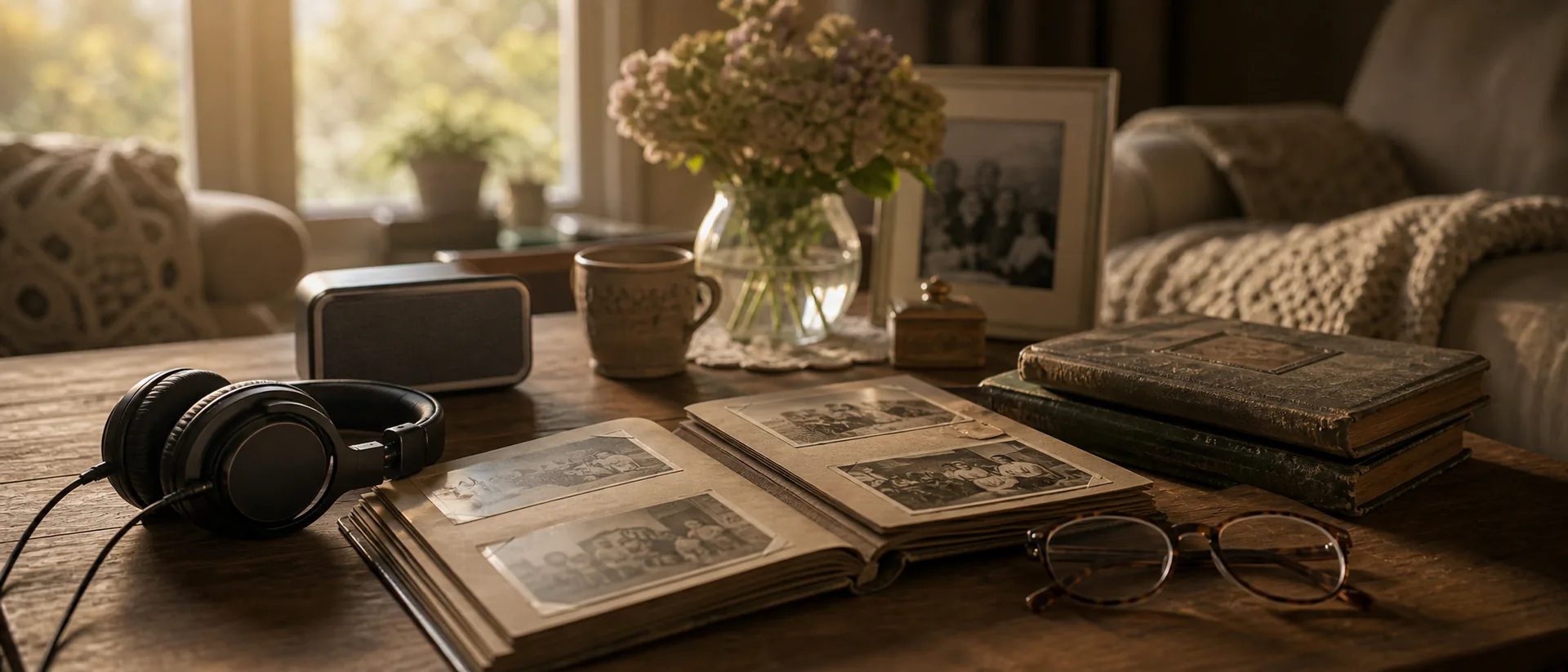
Turn their history into a song the whole family can keep: which stories to collect, which styles suit their era, and how to play it back for them.
Create a custom song for someone special
Share the story, pick the style, and turn your memories into a one-of-a-kind song.
Quick answer: A custom song for grandparents is an original track built from a brief the family supplies: their full names, the town they raised everyone in, and one story the family repeats. Most run 2 to 4 minutes and arrive in 24 hours to 10 days. Families order them for milestone birthdays, reunions and anniversaries.
Nobody plans this in advance. Most families decide to record something about a grandparent in the same month they notice the window is narrowing — after a fall, after a move into a smaller house, after a birthday with a round number on the cake. A song is the version of that record the family actually plays, instead of a box of documents nobody opens twice.
Why does a song work for grandparents?
Because they already own everything they need, and none of it has their name in it. A track is the one gift that cannot be bought off a shelf and cannot be duplicated for the next person on the list.
Three things are doing the work:
- They have seen every gift there is. Someone in their eighties has received four decades of scarves and photo frames — the National Retail Federation publishes what households spend on gifting each year, and most of that budget goes to items that are interchangeable by design. A song is not.
- It describes them as more than "grandma" or "grandpa." The lyric can name who they were before they were anyone's grandparent: the job, the marriage, the crossing, the decisions nobody in the family talks about directly.
- It becomes the family's archive. The track outlives the party. Grandchildren hear it again as adults, and the great-grandchildren hear it for the first time at an age when the original recipient is only a story.
When should you commission one?
Any date the family was already going to be in one room. These are the moments people order for, roughly in order of frequency:
- A milestone birthday — 70th, 75th, 80th, 90th. The most common trigger by a wide margin.
- An anniversary, especially a 50th, when the song is a tribute to the pair rather than to one person.
- Mother's Day or Father's Day, when the grandchildren are the ones commissioning it.
- A family reunion, where the track gets played once for forty people.
- The end of a hard year — a recovery, a move, a loss the family got through together.
- A memorial, when the song is a record of them rather than a present for them.
- A school project from a grandchild, which is how a surprising number of these start.
- No occasion at all. A track that arrives on an ordinary Wednesday often lands harder than one attached to a date.
Which music styles suit their era?
Match the decade they turned twenty, not the decade you did. Taste tends to lock in early, and a track in their own idiom sounds like it belongs to them instead of to the person who ordered it.
- Country — the strongest fit for most grandparent tributes. Plain language, story first, verses that can carry a name and a town.
- Jazz or swing — for the Sinatra and Ella Fitzgerald generation. The most formal option, and the best one for a milestone dinner.
- Classical or orchestral — restrained, unhurried, good for a big birthday or a memorial piece.
- Blues — for a grandparent who carried something heavy for a long time and rarely mentioned it.
- Rock and roll or Motown — for anyone who was young with a transistor radio.
- Folk and acoustic — the safe default when nobody is sure. Guitar, one voice, nothing in the way of the words.
- A style from where they came from — sertanejo, bolero, samba, fado. The archives of American song at the Library of Congress are a good reminder of how much of a generation's identity gets stored in its music, and the same is true of whatever region raised your family.
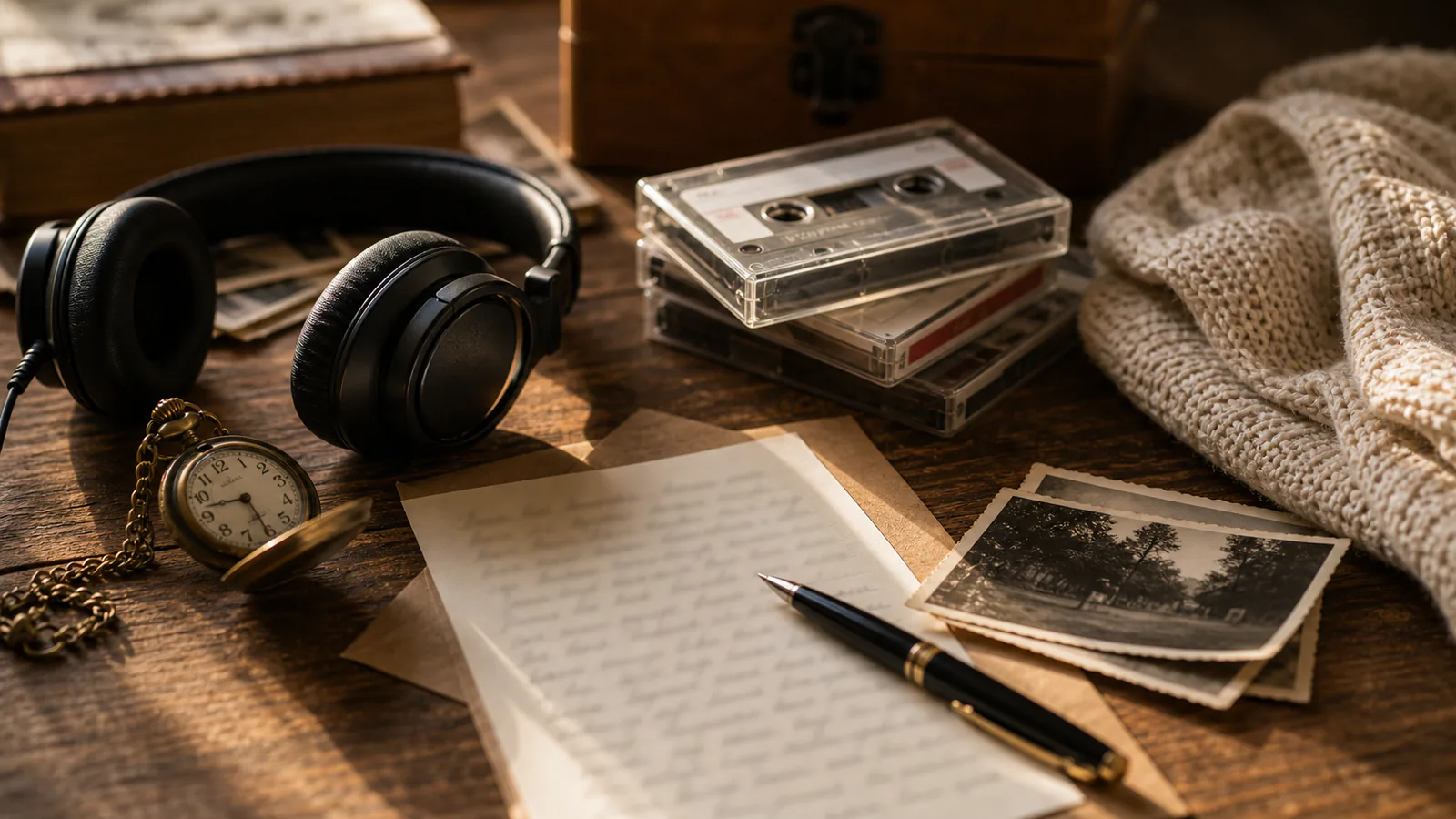
What details make the lyrics land?
The ones only your family knows: the job, the town, the phrase, the object. Blanket affection reads like a greeting card, while a specific detail reads like a portrait.
- Name the work. "She raised five kids, three of them not her own." "He ran the night shift for thirty years." Naming what somebody actually did, in concrete terms, is the same mechanic behind the written gratitude exercises collected by the Greater Good Science Center at UC Berkeley, and it lands deeper than a compliment.
- Name the marriage. Most grandparent tributes turn out to be marriage tributes as well, whether or not both people are still around to hear it.
- Be geographic. The town, the kitchen, the shop floor, the river, the road they drove every Sunday. Place is what makes a memory retrievable.
- Pick one object. The recipe card. The ring. The toolbox. The chair nobody else sits in.
- Write one line forward. A phrase the song hands to the great-grandchildren, so the track still has a job in twenty years.
How should you play it for them?
In a room they cannot politely leave, with no speech beforehand. Delivery is close to half the gift.
- At a family gathering, over a speaker, once, with the phones down.
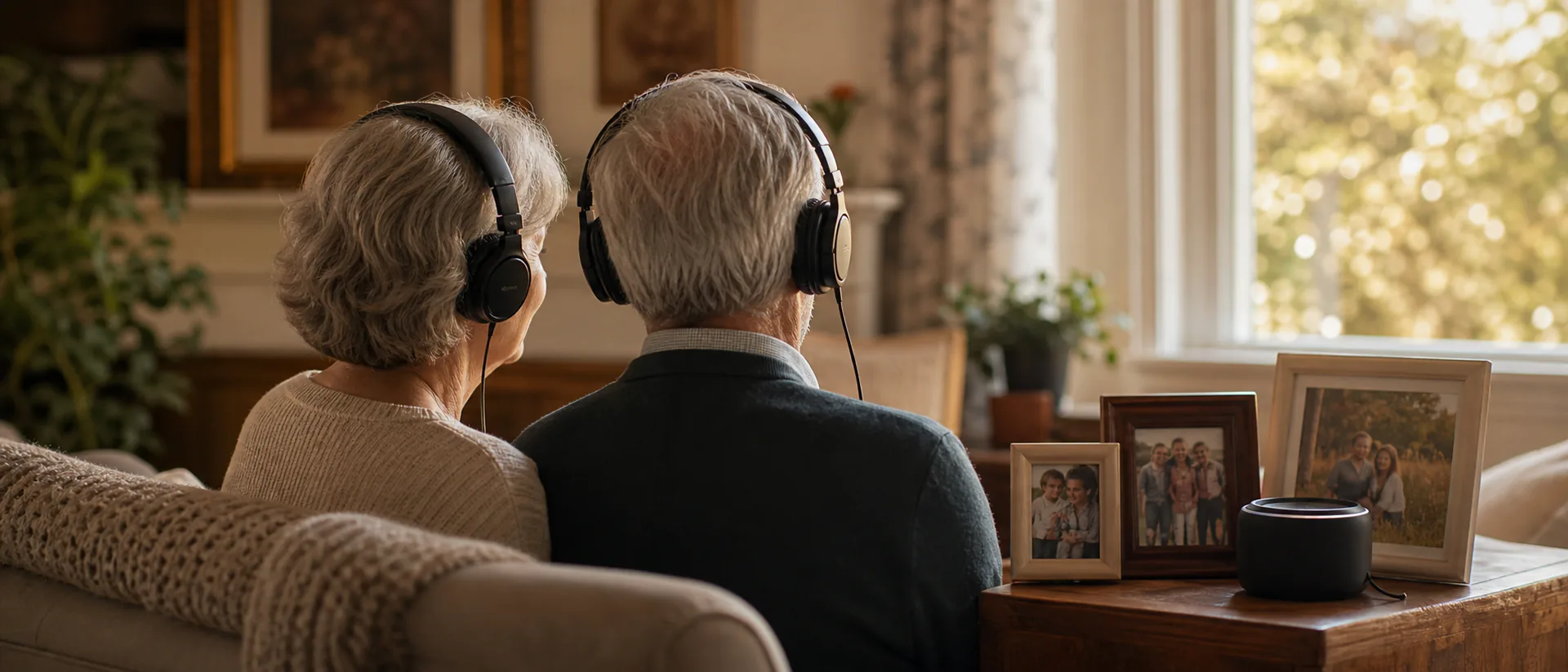
- Alone, with headphones, for the grandparent who does not perform emotion in front of an audience.
- With a printed lyric sheet in large type. For older recipients this is usually the object that ends up on the fridge.
- As a physical copy — a disc, a card with a code, a small framed sheet — for people who trust a shelf more than a cloud.
- At a memorial gathering, when that is what the track is for.
How much does a grandparent song cost?
Between $30 and $2,000+, and most grandparent tributes sit in the middle two tiers, because the polish matters more here than it does for a birthday joke. Price tracks length, revision rounds and how fast you need it.
| Option | Price | Length and revisions | Turnaround |
|---|---|---|---|
| Entry tier | $30–$80 | 2–3 min, 1 revision | Same day to 72 h |
| Mid tier | $80–$300 | 4–5 min, 2–3 revisions | 3–10 days |
| Premium tier | $300–$2,000+ | Multiple drafts, full master | 1–3 weeks |
| Gift voucher | Tier you choose | Family writes the brief | Emailed in minutes |
Milestone birthdays and memorial tracks are the two cases where the mid tier pays for itself, because you get more revision rounds and an arrangement long enough for a second verse about the marriage. The full breakdown sits in our guide to what a personalized track costs. If the family is splitting the decision, a voucher redeemed in their own words hands the brief over instead of the finished song.
What should you put in the brief?
Eight answers are enough, and grandparents reward specificity more than any other recipient. You write the brief; the track is generated from it and checked by a person before it reaches you.
- Their full name, plus what each grandchild calls them — Grandma, Nana, Pop, Papa, Vovó, Abuelo.
- Where they are from, and where they raised the family. Name the actual towns; vague regions produce vague verses.
- Their work. What they did for a living, built, ran or fixed. The craft deserves its own line.
- Their marriage. How long, how it started, what it survived.
- One thing they say that the family quotes. Word for word, odd grammar included.
- One scene, not a montage. A specific morning, a kitchen table, a porch, a drive to the coast.
- The dominant intention. Gratitude, admiration, acknowledgment, or "we see what it cost you." Pick one.
- Their genre, taken from their listening and not from yours.
The long version of this checklist is in our step-by-step briefing playbook, and the process end to end is covered in the complete guide to personalized tracks.
Frequently asked questions
Can the song be in the grandchildren's voice?
Yes, and it is the most requested point of view for this recipient. Say in the brief whose voice the lyric should use: a small child, a grown grandchild, or the family speaking collectively as "we." The choice changes the vocabulary more than anything else in the song — a five-year-old's version stays in short words and concrete images, while an adult version can name what took thirty years to understand.
Can every grandchild be named in the lyrics?
Yes. Send the full list with the spelling and pronunciation you want sung, and mark which names carry the most weight. Names are easy to include, but nine of them in one verse turn into a roll call, and a roll call is not a lyric. A common fix is naming two or three in the verses and letting the last chorus cover the rest as a group.
What if their memory is not what it was?
Say so in the brief and keep the arrangement simple: their era, a slower tempo, their name early, a short chorus that repeats. The Alzheimer's Association describes how families use art and music in daily care. No song can be promised a particular reaction, so do not build the afternoon around getting one. Our piece on music built around older memories covers the format in more detail.
Can several of us pay for it together?
Yes, and group orders are the norm for grandparents. Tell us it comes from more than one person and the lyric can be written in a "we" voice. The practical trick is collecting one memory from each contributor before anybody writes the brief: five short answers give the verses a natural structure, while one person's version stretched across four minutes tends to thin out.
Can the lyrics use their first language?
Yes, and for immigrant families it is often what makes the track work. A chorus in the language they grew up speaking, with verses in the language the grandchildren speak, is a common and effective structure. Send the exact phrases you want, written out, including any nickname or saying that has no clean translation — those are usually the lines the family remembers.
Related reading: a track that maps the whole family story, a personalized track for mom, and a personalized track for dad.
Ready when you are: start their song here and tell us the details only your family would ever think to mention.
About the Author
HosannaSong Team
The HosannaSong team helps people turn meaningful stories into custom songs. We write about personalized music, songwriting, and the craft of giving a track that lasts.
View ProfileCustom Song for a Coworker: A Personalized Track for the Office
Godparent Gift Song: A Personalized Way to Say Thank You
Related Articles

Turn this story into a custom song.
Answer a short brief, choose the style, and get a personalized song made to move the person you love. Start while the memories are still fresh.
Create My Song Now