Prayer Songs Across Cultures: How the Form Shows Up Around the World

Editorial Team
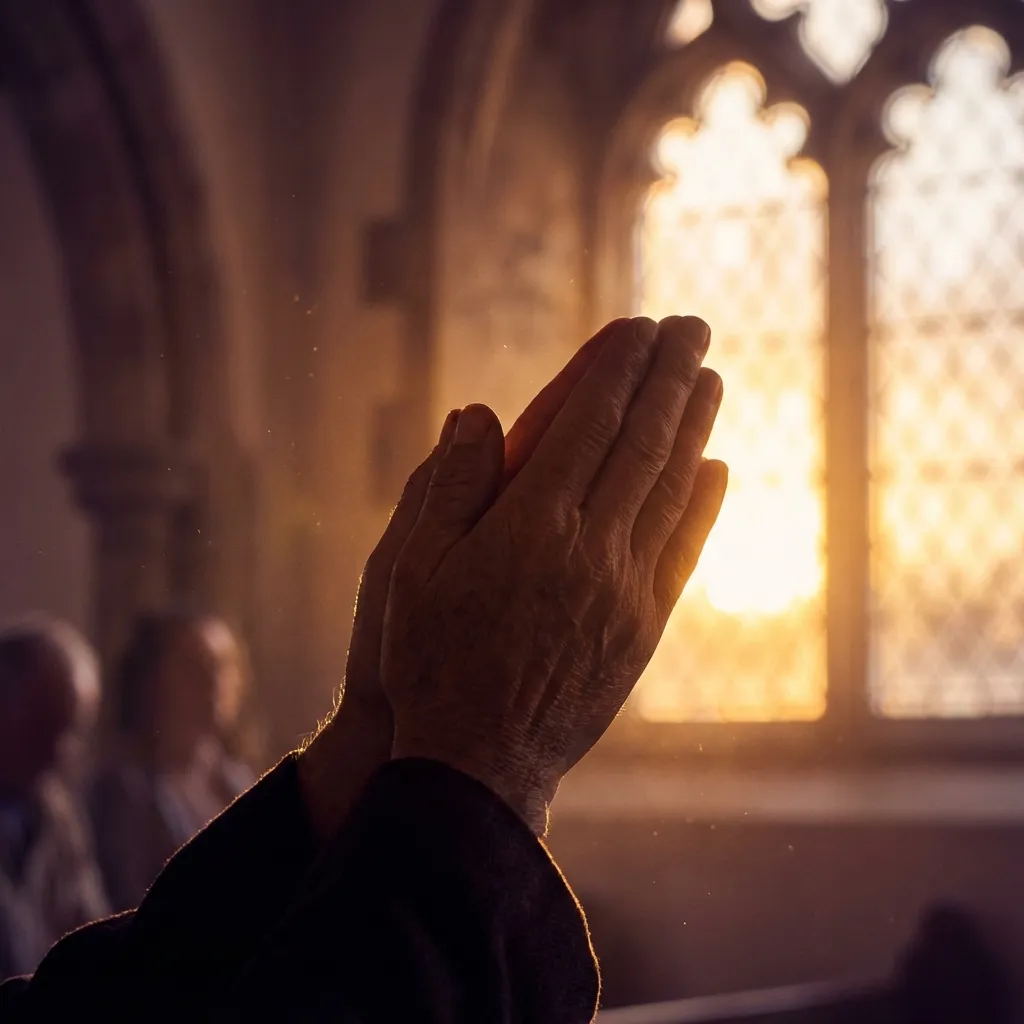
Prayer songs aren't owned by any one tradition. From Christian hymns to Sufi qawwali to Native American song circles, here's how the form shows up across the world's.
The most viral gift of 2026?
Discover why thousands of people are crying (with joy) over this new tribute format.
Prayer songs aren't owned by any one tradition. They're one of those rare forms — like cooking, or storytelling, or the wedding ceremony — that show up almost everywhere humans have organized themselves into communities. The theology changes. The instruments change. The melodies change. The underlying form does not.
This guide is a tour of how prayer songs show up across major traditions around the world, what they have in common, and what makes each one distinct. If you're commissioning a custom prayer song for a recipient whose tradition you're not yet familiar with, this is a good place to read first.
The shared form
Across nearly every tradition, prayer songs share four characteristics:
- Slow tempo. 60–80 BPM, almost universally.
- Repetition. A central phrase, mantra, or chorus that returns.
- Communal or solo. Some are sung together; some alone. Both are common.
- Intention. The song carries a request, gratitude, blessing, or contemplation. It's not background music.
What changes across traditions is the content — language, theology, specific phrases — and the aesthetic — instrumentation, vocal style, harmonic structure. The bones are the same.
Christian hymnody and worship
The Western tradition most readers will already be familiar with.
Roots
Early Christian worship inherited the Psalms from Jewish practice and added new compositions. Over twenty centuries, the form expanded into hymns, gospel, contemporary worship, and contemplative chant.
Major sub-forms
- The Psalms — sung as prayers since well before the time of David
- Gregorian chant — medieval monastic chant, often in Latin, designed for slow contemplation
- Hymns — congregational songs from the Reformation forward; Be Thou My Vision, Amazing Grace, How Great Thou Art
- Gospel — African-American Christian song traditions, foundational to soul, blues, and modern worship
- Contemporary worship — modern band-format congregational song
- Soaking music / scripture songs — instrumental or vocal music for personal prayer; see personalized prayer song
Common usage
Sunday services, personal prayer, hospital chaplaincy, funerals, weddings, baptisms.
Jewish prayer song
Roots
The Jewish tradition gave the world the Psalms — arguably the most influential body of prayer-songs in human history.
Major sub-forms
- Psalms — sung and chanted across Jewish liturgy
- Niggunim — wordless melodies, often associated with Hasidic tradition. The wordlessness is intentional: the soul goes where words can't reach.
- Piyyutim — liturgical poems set to music
- Kaddish — the prayer for the dead, often sung
- High Holy Days melodies — Kol Nidre and others, used annually
Common usage
Synagogue services, Shabbat, holidays, life-cycle events (weddings, funerals, bar/bat mitzvahs).
Islamic devotional music
Roots
Quranic recitation (tajwid) is its own form — chanted, melodically beautiful, but not technically considered "music" in many Islamic traditions. Alongside it, several devotional song forms have flourished.
Major sub-forms
- Nasheeds — devotional songs, often without instruments in stricter traditions. Praise, scriptural references, calls to action.
- Qawwali — Sufi devotional music, originating in South Asia, dating back to the 13th century. Repetitive, ecstatic, designed to bring the listener into deeper devotion. Some of the most widely listened-to devotional music on earth.
- Madih nabawi — songs of praise to the Prophet
- Dhikr — repetitive remembrance practices, often sung
Common usage
Religious gatherings, Sufi shrine settings, Ramadan, mawlid celebrations, personal devotion.
Hindu devotional song (bhakti)
Roots
The bhakti movement (devotional movements within Hinduism) produced one of the largest bodies of prayer music in any tradition.
Major sub-forms
- Bhajans — devotional songs, often communal, with simple repeating phrases
- Kirtans — call-and-response chants, often in larger groups
- Vedic chants — among the oldest continuously practiced sacred music on earth, dating back roughly 3,000 years
- Mantras — short repeated phrases, often used solo (Om Namah Shivaya, Hare Krishna)
Common usage
Temple worship, kirtan gatherings, daily personal practice, festivals (Diwali, Holi, Krishna Janmashtami).
Buddhist chant
Roots
Buddhist chant traditions span thousands of years and cross dozens of cultures.
Major sub-forms
- Pali chants (Theravada) — recitation of suttas in the original language
- Tibetan chants (Vajrayana) — distinctive low-tone overtone singing in some lineages
- Japanese Shōmyō — formal Buddhist chant in Japan
- Pure Land nianfo — repetitive recitation of Amitabha's name
- Mantras — Om Mani Padme Hum, others
Common usage
Monastic practice, meditation centers, lay daily practice, funerals, ceremonies.
Native American prayer songs
Roots
Indigenous prayer songs vary enormously across hundreds of distinct nations and language groups. The form is woven into ceremony, healing, mourning, gratitude, and rites of passage.
Common features
- Often unaccompanied vocals or with hand drum accompaniment
- Frequently passed down only within the family or community that holds them
- Tied to specific ceremonies, seasons, places, and lineages
- Sacred — many songs are not appropriate to record, share publicly, or use outside their original context
Note on respect
This is one tradition where commissioning a "Native American style" song is generally not appropriate. The songs belong to specific nations and are not open-source. If a recipient is Indigenous and you want to honor their tradition, ask them directly what they'd like.
African praise traditions
Roots
African prayer-music traditions span hundreds of cultures and predate written records. They became foundational to gospel, blues, soul, and most modern American music.
Common features
- Call-and-response structure
- Layered polyrhythms
- Communal participation
- Songs of gratitude, lament, work, blessing, ceremony
Common usage
Religious services, ceremonies, funerals, work, communal gatherings.
Secular and "spiritual but not religious" prayer songs
A growing category — prayer songs that operate without specific religious framing.
Forms
- Gratitude songs — songs of thanksgiving without specific religious content; see gratitude song ideas
- Affirmation / declaration songs — used in recovery, therapy, personal practice
- Meditation music with intention — see meditation music vs prayer songs
- Memorial or honoring songs — for loved ones who passed; see custom memorial song
Common usage
Therapy, recovery, secular meditation practice, weddings without religious content, memorials, personal practice.
What this means for commissioning a custom prayer song
Three takeaways for commissioning:
Match the recipient's tradition exactly
Don't ask us to write a "Christian" song for a Buddhist recipient, or a "spiritual but not religious" song for someone whose practice is rooted in a specific tradition. The song should feel native to them.
Don't blend traditions casually
We can write across traditions — but blending requires care. A bilingual Spanish-Portuguese song works. A Sufi-Christian fusion does not, unless the recipient is genuinely in both worlds.
Respect the boundaries of closed traditions
Some traditions — Native American songs especially — are not appropriate to commission in their style. We'll write for a recipient from those traditions in a non-imitating way (acoustic, gentle, honoring their family and life), but we won't reproduce sacred forms that aren't ours to reproduce.
For practical commissioning, see custom prayer song.
For a biblical reference on singing a new song, see Psalm 96:1.
Frequently asked questions
Can I commission a song that draws on multiple traditions? For genuinely multi-religious families or recipients (interfaith marriages, children of mixed-tradition families), yes — carefully. Tell us the situation in the brief.
What if I'm not religious but the recipient is? Tell us their tradition. We'll write the song in language and form that fits them, even if you wouldn't write it that way for yourself.
What if neither of us has a tradition? Default to the secular / "spiritual but not religious" category. Plenty of meaningful prayer-style songs work without any religious framing.
Can a custom prayer song quote scripture or sacred text directly? Yes — see custom prayer song for the briefing approach. Quoting Psalm 23 or specific mantras is common.
What if I want a song that honors a tradition I'm not part of, for a recipient I love? We can write for the recipient in their tradition's language and feel without you having to know it intimately. Tell us what you know in the brief; we'll handle the rest.
Related reading
- More Prayer & Music articles
- Custom prayer song: how to commission one
- What is a prayer song?
- Prayer song for healing
- Prayer song for peace
- Prayer song for strength
- Praying with music: a practical guide
- Meditation music vs prayer songs
- Gratitude song ideas
Ready to commission yours?
Start your custom prayer song now. Tell us the recipient's tradition. We'll honor it.
About the Author
HosannaSong Team
The HosannaSong team helps people turn meaningful stories into custom songs. We write about personalized music, songwriting, and the craft of giving a track that lasts.
View ProfilePraying with Music: A Practical Guide to Using Songs as a Spiritual Practice
Prayer Song for Peace: Music for the End of the Day, the Quiet Morning, the Restless Night
Related Articles

Custom Prayer Song: How to Turn a Personal Prayer Into a Song You Can Carry
Read ArticleWhat Is a Prayer Song? A Guide to Sung Devotion Across Traditions
Read Article
Prayer Song for Healing: How to Use Music as a Tool for Recovery
Read ArticleReady to turn these words vs. music insights into reality?
Don't let another moment fade. Capture your most precious memories in a custom song that will be cherished for generations.
Create Your Song Now