Family Legacy Song: Turn Your Family Story Into Music

Editorial Team
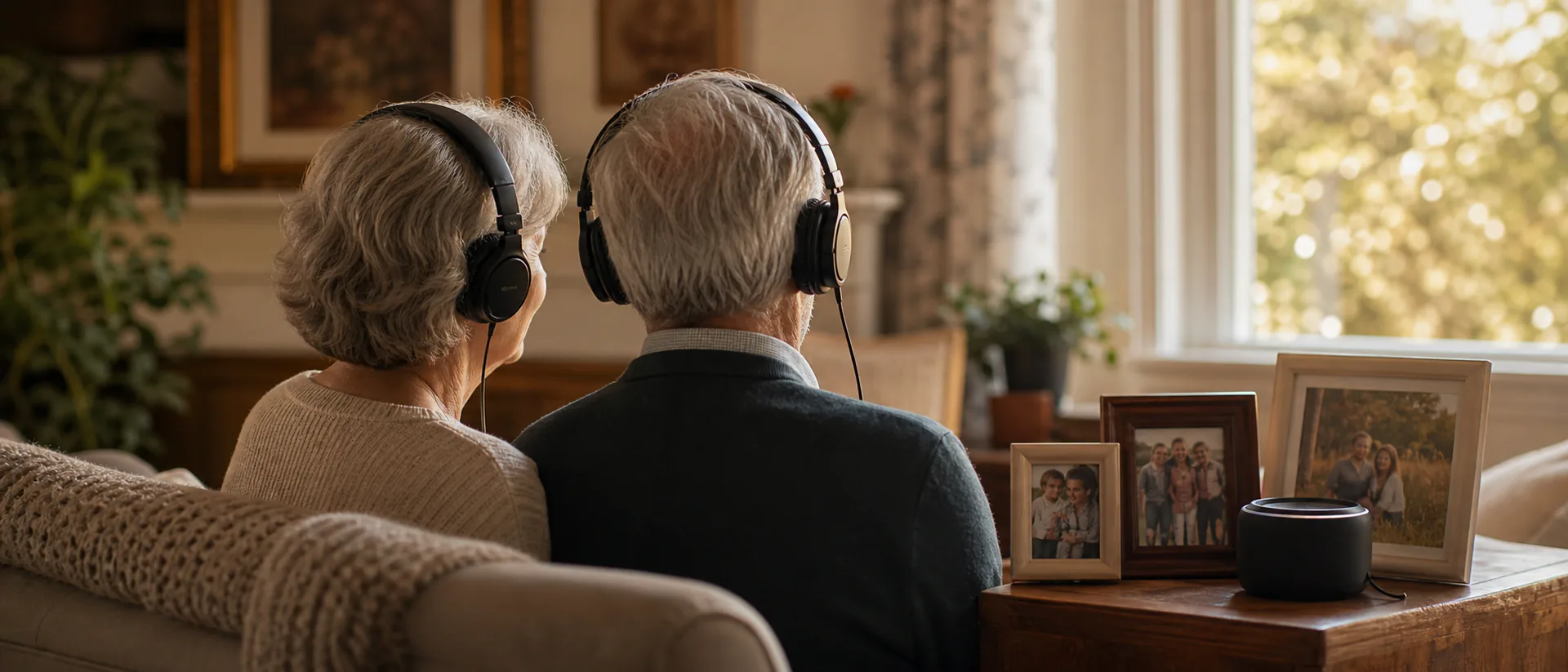
A legacy song records names, places and stories before they fade. How to gather the material and shape it into a track your whole family will keep.
Create a custom song for someone special
Share the story, pick the style, and turn your memories into a one-of-a-kind song.
Quick answer: A family legacy song is a custom track built from one family's names, dates, places and stories, so the record survives in a form people replay. It runs 3 to 4 minutes and is commissioned from a written brief. Common use: played at a milestone birthday or reunion, then shared as an audio file with relatives.
Your family's record lives in three or four heads and a shoebox of photographs. Nobody has written down why your grandmother left the town she was born in, or what your father actually said the night the shop closed. Those details do not survive by accident. They survive because somebody decides to store them somewhere people will voluntarily open again.
What is a family legacy song?
It is a custom track built from your own material: names, dates, places, and two or three stories nobody outside the family could invent. You commission it from a written brief, it runs about three to four minutes, and it arrives as an audio file you can send to everyone in one message.
Nothing about it is generic, and that is the entire point. The song is only as specific as the brief behind it, which is why the ten minutes you spend listing facts matter more than the tier you pick. For the wider picture of how commissioning works end to end, start with the complete guide to custom songs.
Why does a song outlast a letter?
Because a song gets replayed and a letter gets filed. Repetition is the mechanism: a melody gives words a container people open again on purpose, while a document has to be remembered, found and re-read before it does anything at all.
This is not a modern trick. The Library of Congress's Songs of America collection gathers the songs communities used to carry migration, work and family history through decades when almost none of it was being written down. The format did the archiving.
There is a duller advantage too. One letter sits in one drawer. One audio file sits on nine phones, in two inboxes and on a hard drive at your cousin's house, and it survives a house move.
What does it give the youngest relatives?
Somewhere to put "who we are." A twelve-year-old will not sit through four handwritten pages about 1962, but the same twelve-year-old will learn a chorus by accident and repeat a great-grandmother's name for the rest of their life without ever deciding to memorize it.
That is what a legacy track does that a family tree does not. A chart gives dates. A song gives the reason your family left, the job that paid for the house, the phrase somebody said at every single dinner. The Smithsonian Folkways archive was built largely on that principle — ordinary people recorded singing the material of their own community, because the recording was the only durable copy.
It also closes a format gap. If the older generation writes letters and the younger one lives in a streaming app, the song is the one object both sides will actually open.
What does a family legacy song sound like?
Unhurried and acoustic, in most cases. A tempo around 70 to 80 BPM reads as tribute rather than party, and instruments that were already old in 1970 tend to still sound right in 2040 — which matters more here than in any other kind of custom track.
Here is the shape these orders usually take. An eightieth birthday, six grandchildren between five and twenty-two, one instruction from the honoree himself: life is hard, people show up, put that in it. He wanted something they could play at the birthday dinner and again at their weddings.
The brief carried three concrete things — the tool bench he built in the garage, the ledger he kept by hand for thirty-one years, and the winter the factory shut and he took two jobs without mentioning it to anyone. The track came back rootsy: mandolin, upright bass, one warm male vocal, 72 BPM, three minutes and twenty seconds.
What happened at the dinner is the response you are commissioning. Not applause. The room going quiet because the song knew the ledger.
Which details belong in the lyrics?
The ones nobody outside the family could guess. Three to six verifiable facts — a street name, a job, a repeated phrase, an object, one hard stretch and how it ended — outweigh a full page of adjectives every time.
Work through this list and you have a brief:
- Names, spelled the way the family spells them. Include how they connect: "my grandmother Inês, her mother Aparecida, both born in the same house."
- Places with actual names. "The farm" is nothing. "The farm on the Estrada do Coqueiro" is a lyric.
- One object. The ledger, the blue Ford, the sewing machine that still works.
- A phrase the family repeats. Every family has one. Somebody says it at every table.
- One difficult stretch, described plainly. Say what happened and what people did. Do not attach a moral to it and do not turn it into a promise.
- One line of ordinary evidence. He got up at five. She never once called the job hard.
Weak: "She was an incredible mother and we all admire her." Strong: "She worked nights at the hospital for eleven years and still made lunch before she slept."
Leave out anything you would not want played at a full table — unresolved arguments, medical details about living relatives, and any story a person in it has not agreed to share.
How much does a family legacy song cost?
Most orders land between $30 and $300, with turnaround from roughly 24 hours to two weeks depending on tier. Price moves with length, number of versions and extras — not with how much family history you send, which is free.
| Version | Length | Typical price | Turnaround |
|---|---|---|---|
| One honoree, one story | 2:30–3:30 | $30–$80 | 24–48 hours |
| Whole-family version, names in the verses | 3:30–4:30 | $80–$150 | 2–5 days |
| Two-song set, one per side of the family | 2 × 3:00 | $150–$250 | 3–7 days |
| Song plus printed lyric sheet for framing | 3:30 + 1 page | $120–$200 | 5–10 days |
| Song plus photo video for a gathering | 3:30 audio + video | $200–$300 | 1–2 weeks |
Two practical notes. If several relatives are splitting the cost but nobody agrees on the details yet, a song voucher they redeem themselves moves the brief to whoever actually knows the stories. And if you are comparing tiers before you commit, the full breakdown is in what a custom song costs.
What should you say when you order one?
Paste this into the order form and fill the blanks. Plain facts beat polished paragraphs, and the spelling of every name is copied straight through, so write them exactly as your family writes them.
For: [honoree or family name], [ages or years together]. Occasion: [reunion, eightieth birthday, anniversary], needed by [date]. Names to include: [three to eight, spelled correctly]. Places: [town, street, house, workplace]. Three facts: [each one a thing that actually happened]. One scene: [where, what time of day, what was said]. Genre and reference: [genre], sounds like [one artist or track]. Leave out: [names, topics, years that are off limits].
If the person the song is about is still here, do not interview them. Record them. Ten minutes on a phone while they talk about one photograph gives you more usable material than an hour of questions, and the phrases they repeat are the ones that belong in the chorus. For the longer method, read how to write the brief that gets it right.
Frequently asked questions
Can we include specific family stories in the lyrics?
Yes, and the song is worth commissioning only if you do. Send the survival story, the move, the business that failed, the tradition nobody explains to outsiders. Three to six concrete facts is the working range — enough to fill the verses without crowding them. What does not translate is a list of virtues; "generous and hardworking" produces a greeting card, while "he paid the neighbours' rent in August 1994" produces a line.
How do I collect the material from an older relative?
Record a conversation instead of running an interview. Put a phone on the table, hand them one photograph, and ask what was happening the day it was taken — ten to fifteen minutes usually yields three usable stories and at least one phrase you had never heard. Transcribe only the specifics: names, places, dates, objects, exact words. Do it in one sitting, because the second attempt is always more self-conscious than the first.
Is a legacy song a good gift for an eightieth birthday?
It is one of the few options left when the recipient already owns everything and refuses more objects. A milestone birthday also solves the awkward part of the gift, which is when to play it: a dinner with the family already assembled beats handing someone a link on a Tuesday. Order a week ahead so a name correction does not become a deadline problem, and print the lyrics if more than eight people will be in the room.
Who owns the finished song?
Your rights come from the terms you accept at checkout, and they vary between services — personal use is the standard grant, commercial or broadcast use usually is not. The US Copyright Office explainer on what copyright covers is the plain-language starting point. Read the terms before you plan anything public, and get it in writing if the track will play at a ticketed event or in a monetized video.
Can the song be in more than one language?
Yes, and for immigrant families it is often the right call. A chorus in the language the grandparents grew up speaking, verses in the language the grandchildren answer in, is a common and effective structure — say so explicitly in the brief and mark which sections switch, because scattered phrases read very differently from a full bilingual chorus. Send the correct accents and spelling for every name; they are reproduced as you type them.
Related reading: how to honor grandparents with a track, a thank-you song for godparents, and ideas for the person who owns everything.
Ready to put your family's record somewhere people will replay it? Start your custom song here — write the brief first, and spell every name the way your family spells it.
About the Author
HosannaSong Team
The HosannaSong team helps people turn meaningful stories into custom songs. We write about personalized music, songwriting, and the craft of giving a track that lasts.
View ProfileCustom Thank You Song: A Personalized Way to Show Gratitude
Gift for a Single Mom: A Personalized Song That Says It All
Related Articles

Turn this story into a custom song.
Answer a short brief, choose the style, and get a personalized song made to move the person you love. Start while the memories are still fresh.
Create My Song Now