Long Distance Relationship Song: A Track to Close the Gap

Editorial Team
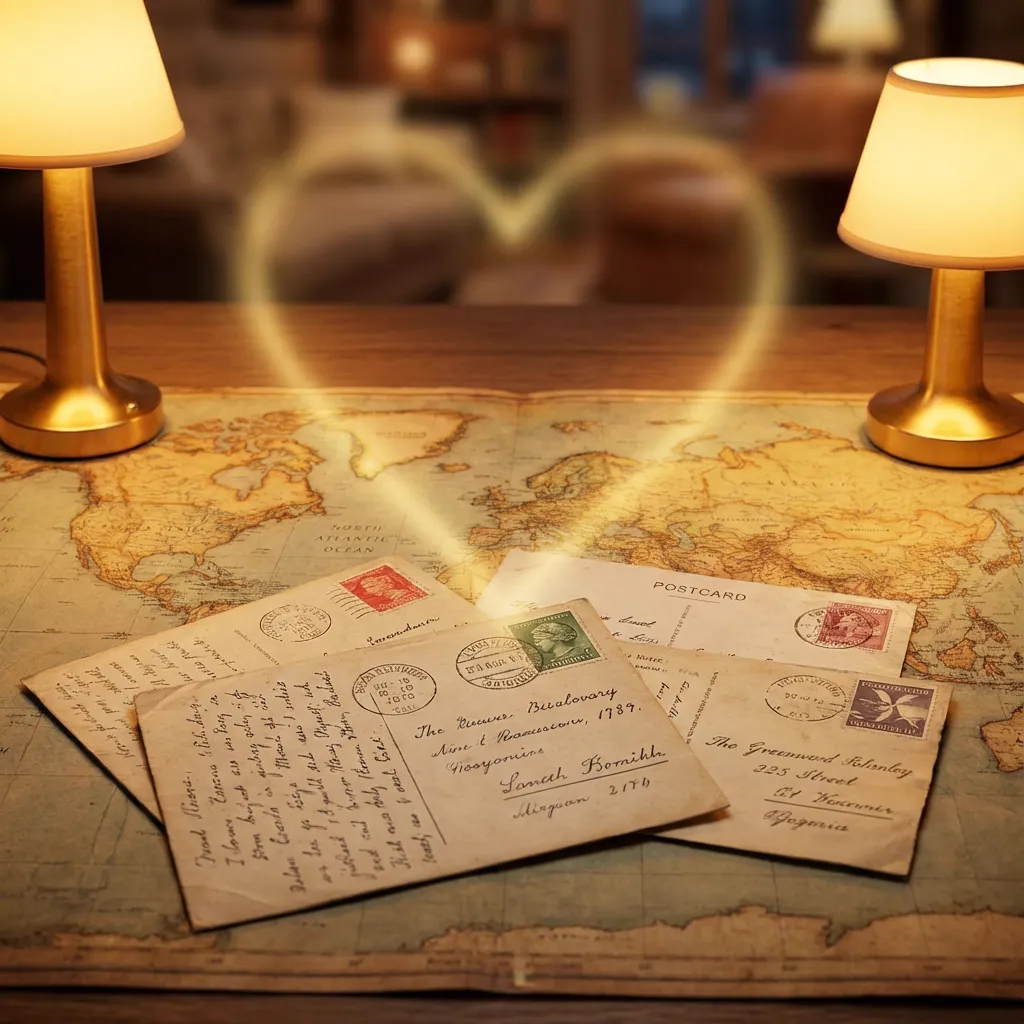
Miles apart, one song you both play. How to write it around your routine, your time zones and the next reunion so it feels shared, not lonely.
Create a custom song for someone special
Share the story, pick the style, and turn your memories into a one-of-a-kind song.
Quick answer: A long distance relationship song is an original track written from a brief about one couple: names, routine, time zones and the date you next meet. Most run 2 to 4 minutes and arrive in 24 hours to 10 days, depending on the tier. Couples play it on the same night, on a call, or on the flight home.
You talk every day and still feel further apart than you did in month one. That is the part nobody warns you about: staying in touch got easy, staying close did not, and the nightly call slowly turns into a status report about work and sleep. A song is one of the few things that can be in both rooms at the same time.
Does a song really close the distance?
No, but it puts the same object in both rooms, which is exactly what a call cannot do. A recording holds a mood, a memory and the details of your specific story in one file, and either of you can open it the moment the gap gets loud.
That is the ordinary mechanism behind shared listening, described plainly in the overview of music and health from the National Center for Complementary and Integrative Health. Nothing exotic is happening. A track you both know starts working like a room you both have access to, and unlike a photo, it takes three minutes of your attention rather than three seconds.
Can you both listen at the same time?
Yes, and that ritual is the main reason people order one. Agree on a time that works in both zones, get on the call, press play together, and do not talk over it.
- Same night, same track. One play, both of you silent. It is the closest thing to sitting on the same couch.
- Same commute. If the time difference makes a shared hour impossible, agree that you each play it on the way to work. Different clocks, same routine.
- On the calendar. Couples who put it in a shared calendar actually keep it. Couples who say "sometime this week" do not.
What helps on the hardest nights?
The quiet hours do the damage — late at night, early morning, the Sunday with nothing scheduled. A track that names your actual routine gives those hours something to hold besides a scroll back through old photos.
Ask for a close, unhurried recording for that use: one instrument, a vocal recorded near the mic, no big production. Save the wide, full-band version for the birthday or the countdown. A song built to be played at midnight in headphones is a different song from one built for a speaker.
How do you write about the wait?
Put an end date in it. A song about waiting with no arrival anywhere in the lyric just documents the gap, while a lyric that names March, the flight number or the last exam turns the same wait into a countdown.
The wait is also the most honest material you have. The brief can admit the bad week, the argument about who calls first, the trip that got cancelled. Tracks that acknowledge the hard part read as true; tracks that are only tender read like a greeting card someone paid for.
What does one of these sound like?
Take a common setup: one partner on a twelve-month posting in Southeast Asia, the other finishing a degree back home. The brief behind a track called "The Same Sky" had three usable things in it, and nothing else.
- The 06:00 call they both kept, named by the hour rather than described as "our talks."
- The yellow cottage they kept sketching to each other, which became the last line of the chorus.
- Two sounds, one from each side: hand percussion from where he was, plain acoustic guitar from where she was.
None of that is poetic. It is specific, which is the only thing separating a song about you two from a song that could be sent to anyone.
Which tempo and length work best?
Between 60 and 120 BPM, and between 2:30 and 4:00 — the right pick depends on when the track will actually be played. A late-night listen and an arrival-day song are not the same piece of music.
| Situation | Tempo | Length | Arrangement |
|---|---|---|---|
| Late-night listen, alone | 60–75 BPM | 2:30–3:00 | One guitar or piano, close vocal |
| Shared play on a call | 75–90 BPM | 3:00–3:30 | Acoustic base, light percussion |
| Birthday or milestone apart | 90–110 BPM | 3:00–4:00 | Full band, wide chorus |
| Countdown to the reunion | 100–120 BPM | 2:45–3:15 | Upbeat pop, one clear hook |
| Arrival day at the airport | 85–100 BPM | 3:00–3:30 | Mid-tempo, big final chorus |
Length is partly a budget question: short entry-tier tracks arrive fastest, longer arrangements with more revision rounds cost more, and the full breakdown of what a personalized track costs walks through the tiers. To compare styles, lengths and delivery windows before you order, the personalized track options are listed here.
Which details belong in the lyrics?
Anything carrying a number, a name or a place. Songs have worked as records of where people went and who they left behind for a very long time, which is the through-line of the Songs of America collection at the Library of Congress — the useful part was always the concrete detail.
- The routine that survived. The 06:00 call, the voice note before bed, the Sunday grocery run on video.
- The two cities. Name them. "Miles apart" is filler; "Lisbon and Chicago" is a line.
- The object that travels. The hoodie, the ring, the paperback you keep mailing back and forth.
- The thing you have never said on a call. Naming what you value in concrete terms is the same mechanic behind the written gratitude exercises collected by the Greater Good Science Center at UC Berkeley.
- What stays out. The visa problem, an ex, the year neither of you wants sung back.
Where does it fit your bigger timeline?
It is the chapter that comes before the ones people photograph. The distance track tends to get replayed later — at the proposal, at the first dance, at anniversaries — because it marks the stretch where you both chose each other with nothing convenient about it. If you want the whole process end to end, the complete guide to personalized tracks covers ordering, revisions and delivery.
What should you put in the brief?
Eight answers, all in plain language. You write them; the track is then generated from your brief and reviewed by a person before it reaches you.
- Both names, spelled the way you want them sung, plus the nickname only the two of you use.
- The two cities and the time gap. Six hours, nine hours, a day ahead — it changes the mood of the lyric.
- How long you have been apart, and how much is left. Three months in and two to go is a different song from year three.
- The routine that survived the distance. The one thing you still do together on a schedule.
- One scene from before. A morning, a station platform, a last night before the flight.
- The reunion. The date, the airport, the first thing you plan to do.
- The genre, taken from what you two already play on calls rather than what you think is romantic.
- What stays out. Names, dates and subjects that should never appear.
The longer version of this checklist lives in our step-by-step briefing playbook.
Frequently asked questions
How does a song help when you are apart?
It gives you a shared object instead of a shared schedule. Calls are live and disappear; a track stays on both phones and can be replayed on the nights that are hard. Because the lyric names your routine, your cities and your reunion date, it does the one thing a generic playlist cannot: it describes the situation the two of you are actually in.
Can we listen to it from two time zones?
Yes, and most couples build a small ritual around it. Pick an hour that exists for both of you, start the call, press play at the same moment and stay quiet through it. If no hour works, agree that you each play it during your own commute. Same track, same day, different clocks — the shared part is the song, not the timestamp.
Should the song name our reunion date?
Name it if you have one. A specific month, flight or semester end gives the lyric a destination, and it turns a song about missing someone into a song about counting down. If the date is genuinely unknown, ask for the reunion to be described as a scene instead — the airport, the front door, the first meal — so the ending still lands somewhere.
Can it reference songs we both love?
You can name them in the brief and the arrangement can echo the mood, but existing melodies and lyrics cannot be reused — that is the line drawn by copyright protection for musical works. Tell us the two or three tracks that belong to the pair of you and why they matter, and the song can sit near that feel without copying anything protected.
What if we have only been apart a few weeks?
Short-distance briefs work well, as long as the timeline is honest. Do not stretch six weeks into an epic; write about the specific weeks you have actually had, which is usually more interesting anyway. Say in the brief how long the separation is expected to last, and the lyric will be sized to fit instead of overreaching into drama neither of you feels.
Related reading: a track that says sorry properly, the song to play when you ask the question, and marking your years with a personal track.
Ready when you are: start the song for the two of you, and put the arrival date in the brief.
About the Author
HosannaSong Team
The HosannaSong team helps people turn meaningful stories into custom songs. We write about personalized music, songwriting, and the craft of giving a track that lasts.
View ProfileCustom Apology Song: How to Say Sorry With a Personal Track
Custom Wedding Song: A Personalized First Dance or Processional
Related Articles
Custom Apology Song: How to Say Sorry With a Personal Track
Read Article
Custom Proposal Song: The Right Track for the Moment You Ask
Read Article
Custom Anniversary Song: Mark Your Years With a Personal Track
Read ArticleTurn this story into a custom song.
Answer a short brief, choose the style, and get a personalized song made to move the person you love. Start while the memories are still fresh.
Create My Song Now