Custom Song vs Cover Song: Which Format Should You Choose?

Editorial Team

A custom song is written from your story; a cover reworks an existing track. Compare cost, turnaround, rights and impact before you order either one.
Create a custom song for someone special
Share the story, pick the style, and turn your memories into a one-of-a-kind song.
Quick answer: A custom song is built from scratch around your story; a cover reworks an existing track with new lyrics. Custom songs run $30 to $2,000 and can be any length or genre, while covers stay locked to the source track's melody and licensing. Choose custom for one-time events like a wedding or a retirement send-off.
The two formats people order most when they want a personalized track are custom songs and personalized covers. They sound like the same product. They are not, and picking the wrong one is the difference between a track that gets replayed for years and one that gets played once, politely, at the table.
Here is what actually separates them: price, turnaround, rights, and how the song lands with the person receiving it.
What is the difference between them?
A custom song is built from scratch around your brief — new lyrics, new melody, new recording. A personalized cover keeps an existing song's melody and chord progression and swaps in new lyrics written for the recipient.
Custom song. Everything in the track exists because of your brief. It doesn't sound like any specific other recording; it has its own structure, hook and feel. The full breakdown lives in our complete guide to custom songs.
Personalized cover. An existing song's instrumental, or a re-recorded version of it, carrying lyrics written about your person. The words are yours; the melody is borrowed.
Both formats begin with your brief and include a lyric review before the recording is finalized. That streamlined process makes a three-day turnaround possible. Recorded music now reaches almost everyone through streaming rather than physical media, according to IFPI's global industry data, and the same shift helped put personalized tracks within reach of a normal gift budget.
How do the two formats compare?
On paper, the gap is price, length and rights. Custom songs run $30 to $2,000+ and typically deliver in 1 to 7 days; covers cluster in the $30 to $120 range and often land in 24 to 72 hours.
| Factor | Custom song | Personalized cover |
|---|---|---|
| Typical price | $30–$2,000+ | $30–$120 |
| Typical turnaround | 1–7 days | 24–72 hours |
| Length | 2–5+ minutes, your call | Fixed by the source track |
| Genre options | 20+ to pick from | 1 — the source song's |
| Melody | New | Borrowed |
| Personal-use rights | Included | Depends on source licensing |
| Revision rounds | 1–2 typical | 1 typical |
The two price ranges overlap at the bottom and diverge at the top. Entry-tier custom songs match cover pricing almost exactly; premium custom songs go far past anything the cover format offers, because there is no ceiling on production once the melody is original. For the full picture, see what a custom song actually costs and how long each tier takes to deliver.
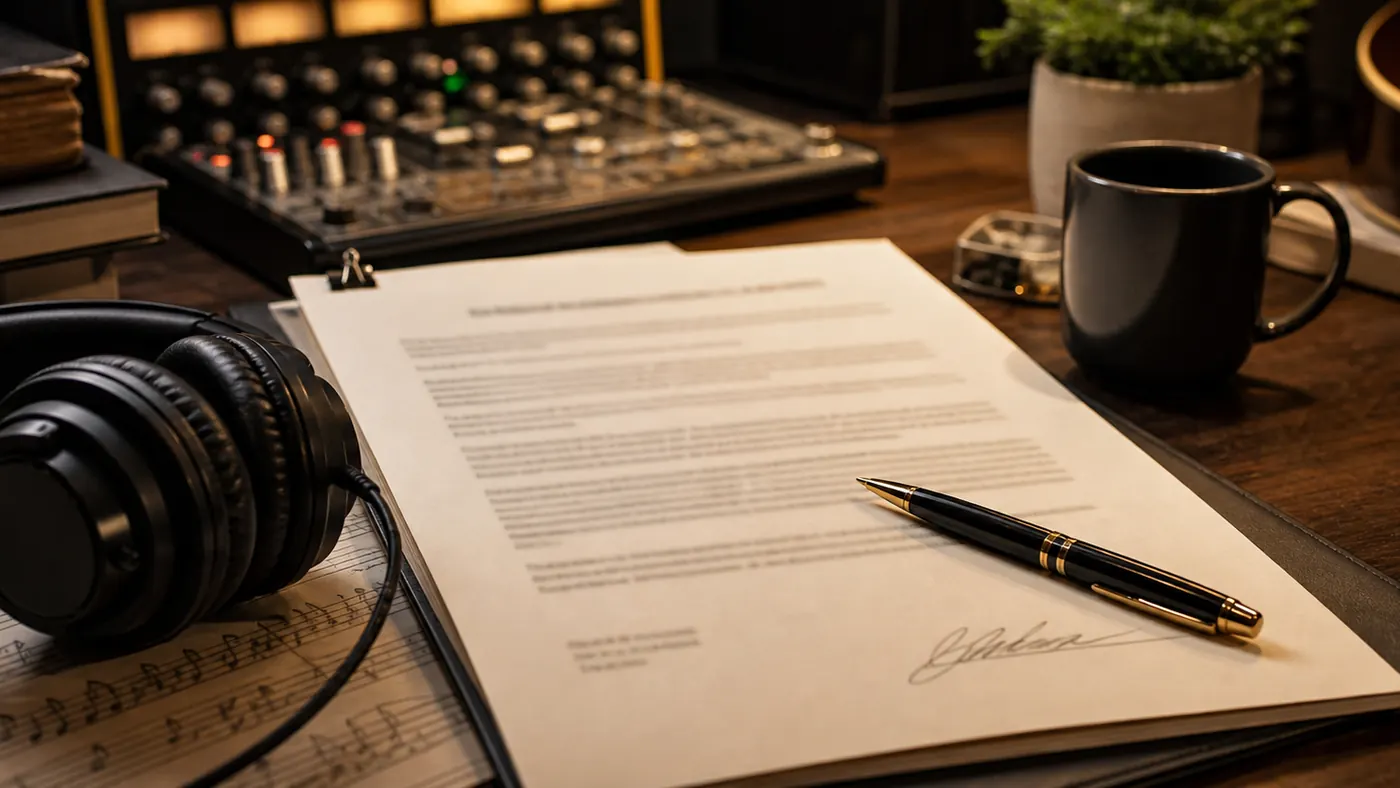
Rights are where the formats stop being comparable. A cover reuses someone else's underlying composition, and reusing a composition requires permission from whoever holds it — the US Copyright Office explains what copyright covers and why the melody is protected separately from the recording. Those rules also differ from country to country; WIPO maintains the international overview. An original track sidesteps the whole question, which is why who owns a personalized track is a much shorter conversation for custom songs.
When is a custom song better?
Choose custom when the song needs to belong to the person, not to a chart. It is also the only option when the genre, the length or the public use of the track matters to you.
- You want a track that feels uniquely theirs, with no one else's song underneath it
- There is no existing song the two of you already call "ours"
- The moment happens once — a wedding, a 40th anniversary, a farewell dinner, a first birthday
- The recipient is the kind of listener who would notice a borrowed melody and quietly file the gift as lazy
- You want a genre no cover-able track happens to sit in — a bossa nova for a Brazilian grandmother, a lo-fi loop for a teenager
- The song will be played out loud, at a venue, in front of people with phones out
When is a personalized cover better?
Choose a cover when a specific existing recording is already part of the story. The gift is not the song; the gift is that song rewritten.
- You and the recipient genuinely have "your song", and rewriting it is the whole idea
- The recipient is sentimental about one particular track and would recognize it in two bars
- You are at the absolute entry price tier and 30 dollars is the ceiling
- The deadline is tomorrow and the occasion is casual — an office send-off, a team birthday
- You are comfortable with the result being heard as a version of something else
What are the trade-offs of each?
Every cover carries the original with it, and every custom song carries your brief. Those are the two failure points, and they are worth naming before you pay.
Three things to know about covers. First, part of the song will always belong to the original — anyone who knows the source hears "their version of that track", not their track. Second, sharing is restricted: social platforms run automated matching against licensed catalogues, so a cover can be muted or blocked even when you paid for it. Third, the format only shines when the source is meaningful. A cover of "your song" rewritten for a reception can be genuinely moving. A cover of a random hit with a name swapped in reads as a gimmick.
Three things to know about custom songs. First, the brief carries the whole weight — a cover borrows the safety of a song that already works, while an original has nothing to hide behind. Second, you control length, genre, key, vocal range and structure, all of which a source track would have decided for you. Third, replay value tends to run higher, because there is no original version for the recipient to drift back to.
How do you decide in one minute?
Run one test: is there a specific existing recording the gift is rewriting? If yes, order a cover. If no, order a custom song — a cover would be borrowing meaning from a track that means nothing to the recipient.
Two follow-up questions settle the rest:
- Does the occasion deserve original music? Wedding, milestone anniversary, retirement, birth, a manager's last day after fourteen years — original. Friend's birthday, group gag gift, office prank — either works.
- Will it be played in public or posted online? Original clears; covers depend on the source song's licensing.
For the record, we build original tracks only, and we say so on the custom song service page. That is a position, not a verdict — covers are a real format with a real place. We simply think an original replays better over ten years.
What should you say when ordering?
Lead with the format decision, because it changes everything downstream. Then give the details that only you have.
Say these seven things, in this order:
- The format. "Original custom song" or "cover of [exact track and artist]". Never leave this implied.
- Who it is for, in one line. "My manager, Dani, leaving after fourteen years running the warehouse floor."
- The occasion and the date it will be played. A send-off on a Friday afternoon is not a wedding first dance.
- One dominant emotion. Gratitude, pride, nostalgia, apology, relief. Pick one; the others can sit in the corners.
- Three concrete details. Not "she's amazing" — "she covered the 4am shift for six weeks when my mother was in hospital and never once mentioned it."
- One reference track. One. "Like Bruno Mars at a reception" or "like Adele with one piano." Multiple references pull the production in three directions.
- What to leave out. The redundancy, the ex, the argument last Christmas. Boundaries make better songs.
If you want the long version with worked examples by occasion, we broke it down in how to write a brief that works.
Frequently asked questions
Can a custom song sound like a specific artist?
Yes — a brief can target a feel without copying a track. Naming one reference tells the production what tempo, instrumentation and vocal register to aim for, and that is entirely legitimate. What it cannot do is reuse the actual melody of that artist's recording. The moment a real melody is reused, you are ordering a cover, with all the licensing that comes attached to it.
Can I order both formats at once?
Some services support both; most specialize in one. If you want a cover of a specific track and an original song for the same person, expect to order them separately and at two different price points. Check the format described on the order page before paying, because the word "personalized" gets used for both products and the thing that arrives in your inbox is not the same.
Will my custom song end up on streaming platforms?
Only if you put it there. Personal use is included by default with most custom song orders, while distribution to Spotify or Apple Music is a separate add-on with its own paperwork and a two to four week wait. Covers are much harder here: releasing one commercially means clearing the underlying composition first, which is why most services keep covers to private use only.
Can I post a personalized cover on social media?
It depends on the source song and the platform. Social networks run automated content matching against licensed catalogues, so a cover can be muted, geo-blocked or taken down even though you paid a service to make it — and that happens after the party, when the video is already up. An original custom song has no source recording to match against, so it travels through feeds intact.
Which format is delivered faster?
Covers, usually. Because the instrumental already exists, entry-tier covers often land in 24 to 72 hours, while most custom songs deliver in 1 to 7 days depending on tier and how many revision rounds you use. If your deadline is under 48 hours, check whether the service sells a rush option before you assume the standard turnaround applies to your order.
What if I still cannot decide?
Default to a custom song unless one specific track is the thing the gift is rewriting. That single test resolves most cases. If the recipient would point at a real recording and say "that's our song", a cover honours it. If no such recording exists, a cover just attaches your words to a melody that carries no history for them, and the gift loses its only advantage.
Related reading
Working out the wider category first? Start with personalized music explained end to end, then compare providers in our rundown of custom song services before you commit to a format.
Ready to commission yours?
Start your custom song now. Pick original, brief it properly, and the track will earn its place in the playlist.
About the Author
HosannaSong Team
The HosannaSong team helps people turn meaningful stories into custom songs. We write about personalized music, songwriting, and the craft of giving a track that lasts.
View ProfileCustom Song Copyright: Who Owns Your Personalized Track?
Where to Get a Custom Song Made: Best Sites and Step-by-Step Guide
Related Articles

Custom Songs: The Complete Guide to Making a Personalized Track
Read Article
Custom Song Copyright: Who Owns Your Personalized Track?
Read Article
Custom Song Brief: How to Write One That Gets the Song Right
Read ArticleTurn this story into a custom song.
Answer a short brief, choose the style, and get a personalized song made to move the person you love. Start while the memories are still fresh.
Create My Song Now