Custom Wedding Song: A Personalized First Dance or Processional

Editorial Team
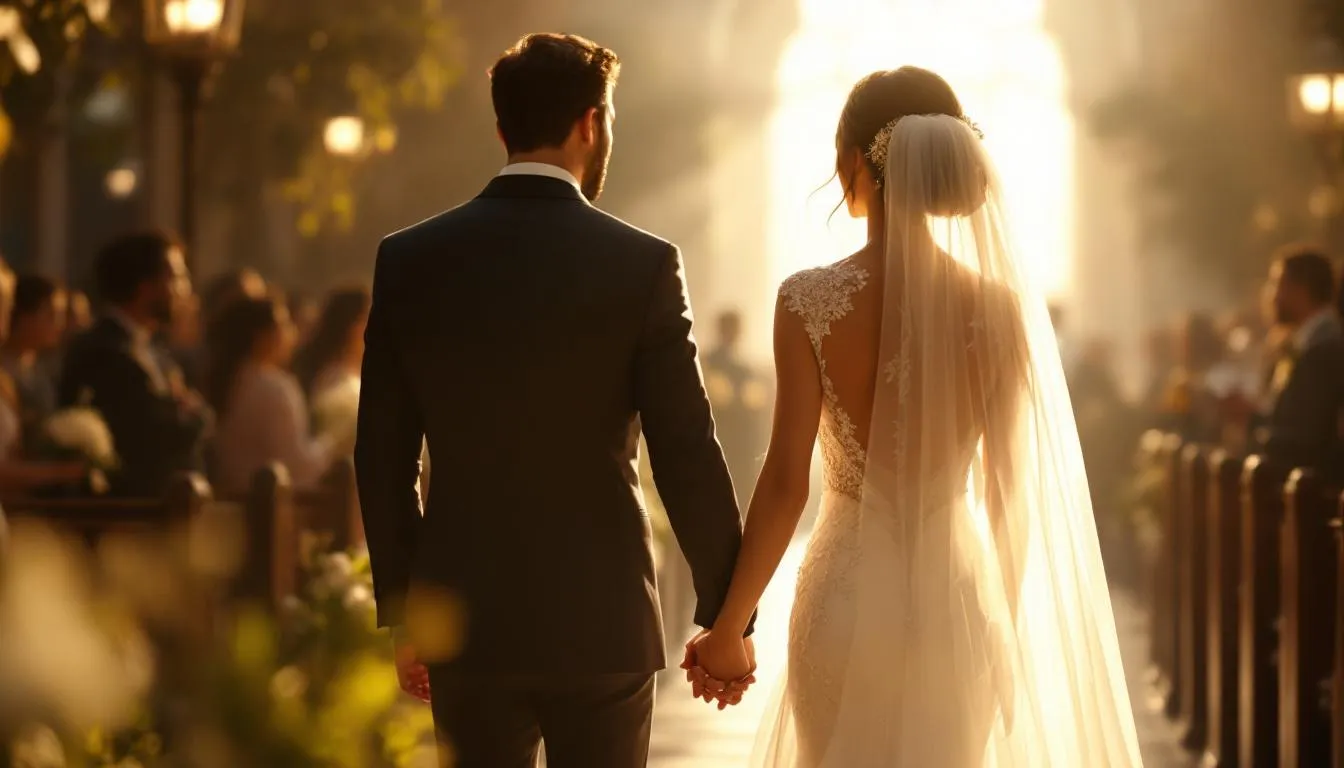
How to commission a wedding song: what the writer needs, how long it takes, how to time the edit to your entrance, and what to send to the DJ.
Create a custom song for someone special
Share the story, pick the style, and turn your memories into a one-of-a-kind song.
Quick answer: A custom wedding song is a track produced from a couple's own brief: their names, their story, and the exact moment it will play. First-dance versions typically run 3:00 to 4:30 at 70 to 90 BPM. Couples commission one for the processional, the first dance, the recessional, or a vow moment.
Most weddings run on the same short list of songs. Your guests have heard that first-dance track at three other receptions this year, and half the time the couple picked it in a rush because the DJ needed an answer by Friday. A song written for your relationship fixes a narrower problem than people expect: it takes the borrowed feeling out of the two or three minutes when the whole room is watching you.
Which wedding moments need their own song?
Four moments account for almost every wedding commission: the processional, the first dance, the recessional, and the vow or unity moment. Each has a different length, a different tempo, and a different job, which is why one track rarely covers two of them.
Processional. The walk down the aisle. Music plays for 60 to 90 seconds. The brief has to account for that timing — the chorus needs to land while you are still walking, not after you have already arrived.
First dance. The most-requested format by a wide margin. Two numbers decide it: a tempo you can actually dance to, and a length that does not overstay. If this is the only track you order, order a song built for the first dance and let the rest of the day run on the playlist.
Recessional. The walk out. Faster, brighter, louder. A completely different feel from the processional, and the mistake is reusing the same arrangement at a higher volume.
Vow or unity moment. Some couples want music under the vow exchange, a candle lighting, or a ring warming. Often instrumental, so the words never compete with the ones being said. If the proposal already had its own track written for the ask, this is where a callback to that melody works.
Why not just use a wedding playlist?
Because a playlist track is about someone else's relationship, and everyone in the room already knows that. Three reasons couples give after the fact.
- The moment cannot repeat. Whatever plays during your first dance becomes the song you associate with it for the next forty years. It is worth ten minutes of deciding.
- It explains you to the room. Your guests know fragments of the relationship. Lyrics can carry the version only the two of you have — the year, the city, the thing one of you said. Songs have done that work for ordinary people long before streaming existed, which is the whole premise of the Library of Congress collection Songs of America.
- It outlives the rest of the day. The flowers wilt, the cake is gone by midnight, the dress goes into storage. The audio file does not.
Which genres suit a wedding song?
Country, pop, and jazz cover the large majority of first dances; classical and instrumental arrangements dominate processionals and recessionals. The safest rule is to match the venue rather than your streaming history — a heavy arrangement in a garden ceremony reads as a mistake even when the song itself is good.
- Country — the default first-dance choice, because the form was built for storytelling.
- Jazz — elegant, slow, timeless. Works in halls with real acoustics.
- Classical — processionals and recessionals. A string arrangement makes an entrance feel formal without any effort from you.
- R&B — for couples whose dating years lived there.
- Pop — modern, adaptable, and the least likely to age badly.
- Reggae — beach and destination ceremonies.
- Electronic — reception entrances and high-energy first dances.
Genre also changes the arrangement time, so check the delivery options listed on the plans page before you lock a style.
What tempo works for a first dance?
Between 70 and 90 BPM, with a total length of 3:00 to 4:30. Below 70 the dance drags and couples start swaying out of time; above 90 a slow-dance hold stops working and you end up improvising in front of two hundred people.
Two more specs matter as much as tempo. Keep the tempo consistent — a track that accelerates halfway through is genuinely hard to dance to — and make sure the chorus lands twice, because that is the part guests will hum in the parking lot.
| Wedding moment | Typical length | Tempo range | Order by |
|---|---|---|---|
| Processional | 1:00–1:30 | 60–75 BPM | 8 weeks before |
| First dance | 3:00–4:30 | 70–90 BPM | 8 weeks before |
| Recessional | 1:00–2:00 | 100–125 BPM | 6 weeks before |
| Vow or unity moment | 2:00–3:00 | 60–72 BPM | 6 weeks before |
| Reception entrance | 0:45–1:30 | 110–128 BPM | 6 weeks before |
Read the "order by" column against your actual calendar, not your intentions. Rush options exist, but they compress the revision window, and revisions are where a wedding track usually gets fixed.
How much does a custom wedding song cost?
Wedding tracks sit in the mid-to-premium range, roughly $150 to $500 and up, because the finish matters more here than for a birthday track nobody plays through a PA. Delivery normally takes days rather than weeks, but the calendar above is the number that should drive your order date.
For a full breakdown of what moves the price, see what a personalized track usually costs and how long delivery actually takes. If you want context on how households budget around milestone occasions, the National Retail Federation publishes consumer spending surveys by event.
How do you get the song to the DJ?
Send the file at least two weeks before the date, in a lossless or high-bitrate format, with the moment written in the filename. Do not be the couple handing a phone to the DJ during cocktail hour.
- Test it at the venue. Bluetooth from a phone through a hall PA sounds nothing like your headphones.
- Keep a backup. Cloud folder, USB stick, and the DJ's inbox. Three copies, three places.
- Print the lyrics in the program. Especially when the words carry the story. Guests read them.
- Consider a private first listen. Some couples play it once on the morning of, so they can be present during the dance instead of surprised.
- Check the rights line before you post the video. Playing a track at your own reception is not the same as publishing it on a monetized channel — the US Copyright Office explains what a copyright covers in about five minutes of reading.
What do couples get wrong most often?
Ordering too late is the single most common error, followed by picking a genre the venue cannot carry. Both are avoidable in the week you set the date.
- Commissioning six days out. Order eight weeks before. You want at least one revision round with time to breathe.
- Genre-venue mismatch. A heavy rock first dance in an outdoor garden ceremony fights the room.
- Skipping the danceability test. Play the demo and slow-dance to it in your kitchen, in hold position. If it does not work there, it will not work in front of guests.
- Treating it as a one-off. Couples who commission for the wedding often come back to mark the years with a new track, which is easier when the first brief is saved.
What should the brief include?
Wedding briefs need more practical detail than any other kind. You write the brief and a human reviews the result before delivery; the audio itself is produced from what you send, so the specificity of your notes is what separates a personal track from a generic one.
- Both names, and how you address each other. Nicknames included.
- Date and venue type. Outdoor, hall, beach, rooftop, formal, casual.
- The story. How you met, when you knew, how the proposal happened. One short paragraph each.
- What the marriage is built on. Partnership, shared work, shared survival, shared humor. Be concrete: "she drove nine hours in a storm" beats "she is supportive."
- Which moment it plays in. Processional, first dance, recessional, vow.
- Required length. Say it explicitly. Wedding moments run on fixed time blocks.
- Tempo. 70 to 90 BPM for a first dance; slower for a processional.
- Genre, matched to the venue.
- Required key, if a live musician will play alongside the recording.
The full method is in the playbook for writing a song brief, including the details people forget until the demo arrives.
Frequently asked questions
Can both our names be in the lyrics?
Yes, and you should say exactly how you want each name to appear. Full names read formal, nicknames read intimate, and a name that only one family uses can land as a private joke in a room of two hundred. Write the spelling and the pronunciation in the brief, especially for names that get mispronounced. If you would rather the names stay out entirely, say that too.
Can the song tell our actual story?
Yes, and that is the entire reason to commission one. The lyrics can carry how you met, the year, the city, the proposal, the thing that nearly went wrong. Specific details work better than large statements: a street name, a shared job, a car that kept breaking down. Give three or four concrete moments rather than a general description of the relationship, and pick ones your guests will recognize.
Can a friend perform it live at the ceremony?
Yes. Higher tiers include a lead sheet or score as an option, so you get both the recorded file and something a musician can read. Tell us in the brief that a live performer is involved and name the required key — a singer's comfortable range is not negotiable, and transposing after the fact wastes a revision round. Give the performer the file at least three weeks out.
Can we order more than one song for the day?
Yes, and couples covering several moments usually bundle them. The common combination is a processional plus a first dance, sometimes with a shorter recessional built from the same melody so the day sounds coherent rather than assembled. Tell us all the moments in one brief; sharing the source material between tracks is faster and cheaper than commissioning three unrelated songs separately.
Can the song be bilingual?
Yes. Spanish-English and Portuguese-English wedding songs are routine, usually with one language in the verses and the other in the chorus, or a full verse for each family. Say which language belongs to which side and whether any specific line needs to be understood by grandparents who speak only one of them. Mixed-language choruses work best when the hook stays in a single language.
Related reading
If you are still mapping out what to order, start with the complete guide to commissioning a track, which covers pricing tiers, formats, and revisions across every occasion, not only weddings.
Ready to commission yours?
Start your wedding track now and give yourself eight weeks before the date. The moment happens once; the file lasts as long as you keep backing it up.
About the Author
HosannaSong Team
The HosannaSong team helps people turn meaningful stories into custom songs. We write about personalized music, songwriting, and the craft of giving a track that lasts.
View ProfileLong Distance Relationship Song: A Track to Close the Gap
Custom First Dance Song: A Track Written for Your Marriage
Related Articles
Custom First Dance Song: A Track Written for Your Marriage
Read Article
Custom Proposal Song: The Right Track for the Moment You Ask
Read Article
Custom Anniversary Song: Mark Your Years With a Personal Track
Read ArticleTurn this story into a custom song.
Answer a short brief, choose the style, and get a personalized song made to move the person you love. Start while the memories are still fresh.
Create My Song Now