Custom Song for Kids: A Personalized Track Made for Your Child

Editorial Team
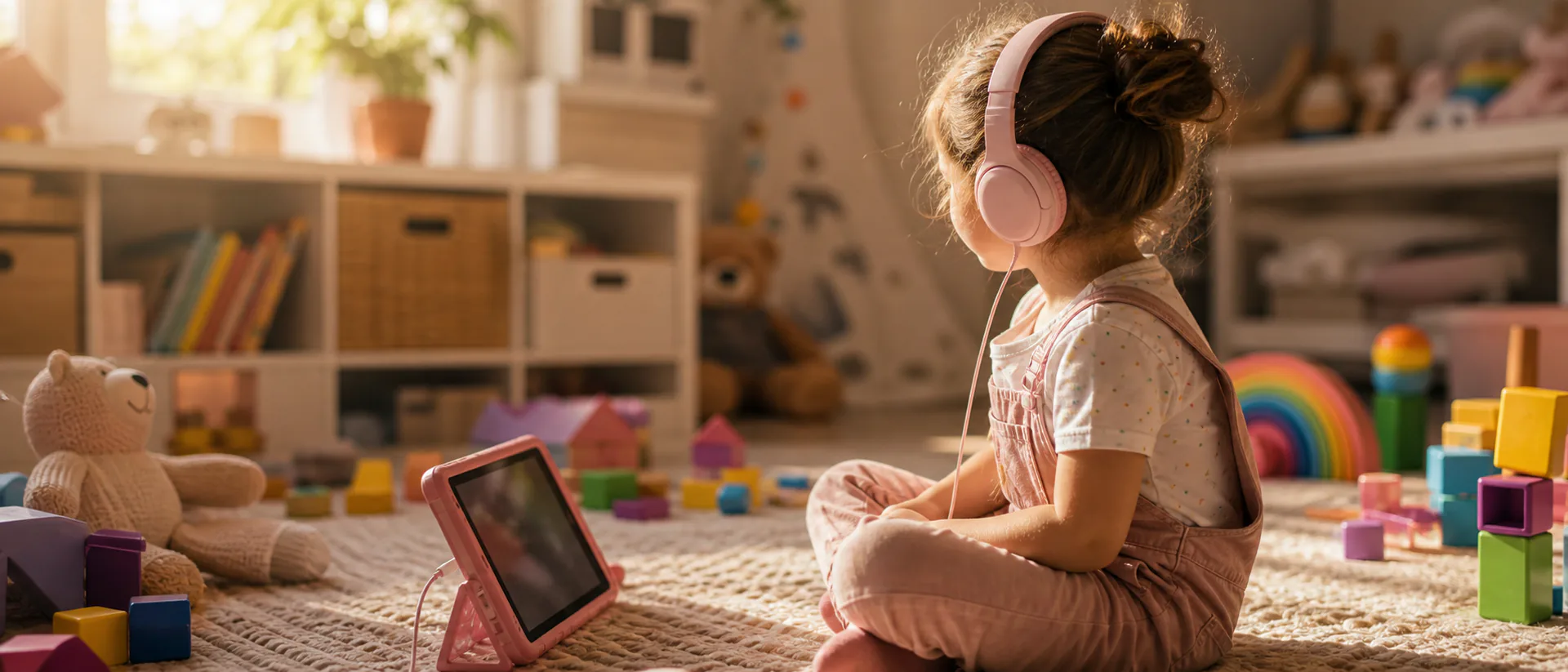
Kids replay songs about themselves for months. How to pick the style, keep the lyrics age-appropriate, and include details they will recognize.
Create a custom song for someone special
Share the story, pick the style, and turn your memories into a one-of-a-kind song.
Quick answer: A custom song for kids is an original track written from a brief you fill in: the child's name, one real detail, and the style they already listen to. Most run 2 to 4 minutes and get used as a birthday gift, a party moment, or the last step of the bedtime routine.
You bought the toy they asked for all year, and two weeks later it lives under the couch. Kids do something uncomfortable to gifts: the more an object costs, the faster it turns into furniture. The exception is the thing they go back to on their own, without anyone suggesting it. Usually that thing is a song.
Why does a song outlast a toy?
Because a toy is interchangeable and a song with their name in the chorus is not. A child can swap one dinosaur for another dinosaur, but there is no substitute for two and a half minutes that describe their kitchen, their dog and the way they say a word wrong.
Two more things happen after that. The song grows with them: at five it is a fun track with their name in it, and at twenty-five it is evidence that somebody was paying attention. And it travels — dorm rooms, first apartments, a wedding slideshow — because a file weighs nothing and the moment it captures cannot be re-recorded later. The full anatomy of the product is in the complete guide to custom songs.
When should you order one for a child?
The strongest moments are the ones with a clear before and after. A birthday works; a random Tuesday works less well, because the song has nothing to sit next to.
- A new baby. A newborn needs the slow, short, low-percussion version of the format.
- The first birthday. The party is usually for the adults; a track that names the year outlasts the photo backdrop.
- Adoption finalization day.
- The milestone birthdays. 5, 10, 13, 16, 18.
- A move or a new school. A hard stretch is easier to name in a song than in a conversation.
- Graduation, at any level.
- As a yearly tradition. Some families order one every year and end up with an audio record of a childhood.
Which style and length fit each age?
The younger the child, the shorter and slower the track. From about six years old the rule flips completely: age stops deciding and the child's own playlist starts deciding.
| Age | Recommended length | Tempo | Styles that usually fit |
|---|---|---|---|
| 0–2 years | 1.5–2 min | Very slow | Lullaby, piano, music box |
| 3–5 years | 2–2.5 min | Mid, repeated chorus | Kids folk, ukulele, acoustic |
| 6–8 years | 2.5–3 min | Upbeat | Pop, adventure, soundtrack |
| 9–12 years | 3–4 min | Whatever is on their playlist | Pop, soft rap, light rock |
| Any age, bedtime | 2–3 min | Slow, no hard percussion | Acoustic, ambient |
Two practical rules fall out of that table. Under five, the chorus should repeat at least three times and contain the name — that is what lets a child sing it back within a few days. Over nine, ask who their favorite artist is before you choose anything, because at that age a track that sounds "for little kids" is received as a personal insult. If you want a sense of how wide the children's-music field actually is, the Smithsonian Folkways children's catalog is a century of examples that never once talked down to the listener.
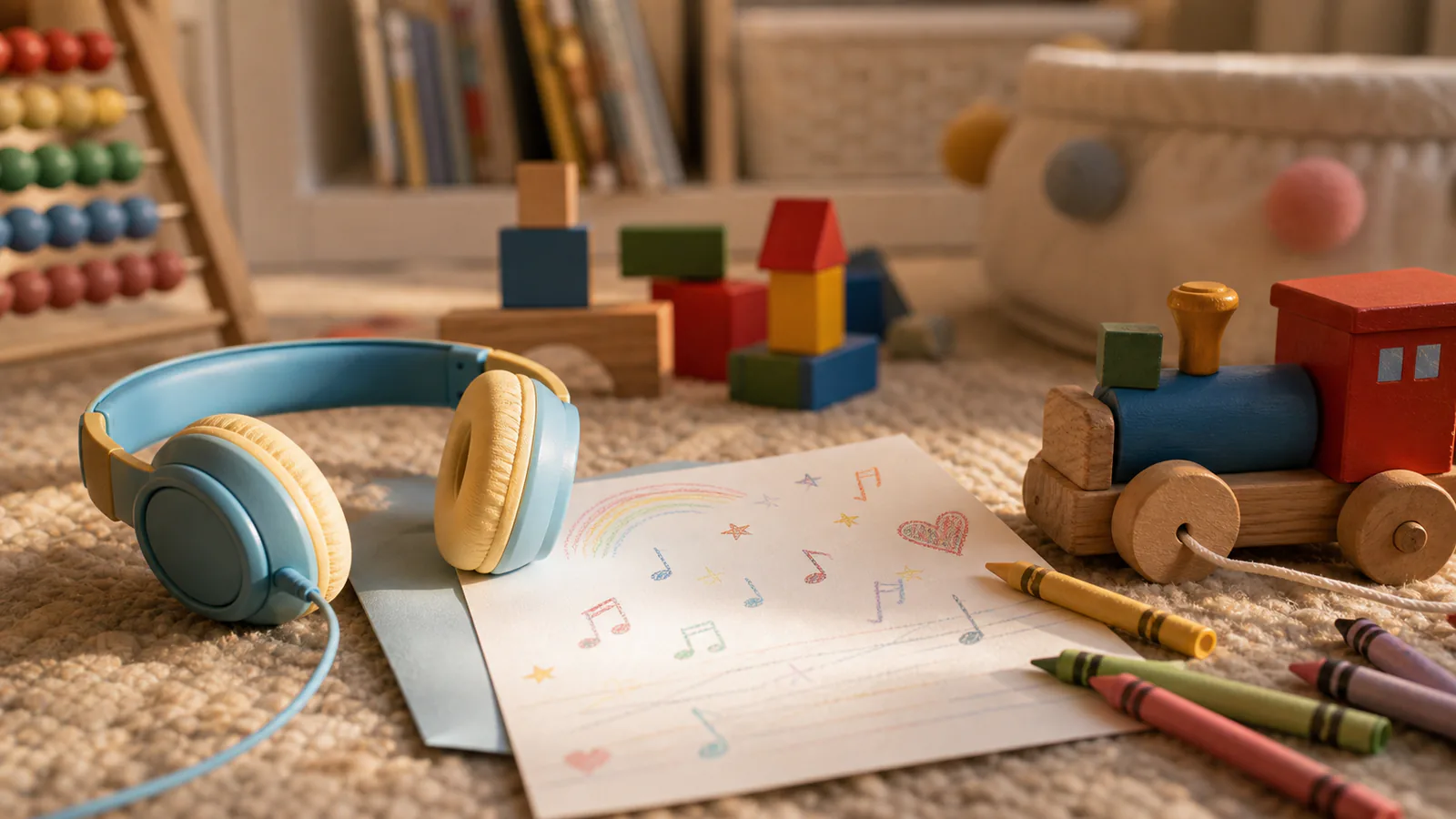
What makes a child play it on repeat?
Recognition arrives before comprehension. A three-year-old does not analyze a lyric — they hear their name sung, understand the song is about them, and stop moving to stare at the speaker.
What matters is what comes next, and it is repetition. Kids do not listen to a song, they exhaust it: in the car, in the shower, before bed, until the whole household knows it by heart. The track also lives in the same place as everything else they hear — industry listening data published by the IFPI shows most listening now happens on demand, so their song sits in the same queue as their favorite cartoon theme. Four things tend to earn that repeat:
- A line about right now. The age, the obsession, the missing tooth. Specific to this month.
- A line that keeps. The one sentence you would want them to hear at every age.
- A chorus they can actually sing. Short words, few syllables, no key changes.
- One concrete sensory detail. The green dinosaur, the blue blanket, the sound of the garage door.
How do you use the song after delivery?
Give it a job. A song played as background noise disappears; a song played at a fixed moment becomes a ritual within about a week.
- Bedtime. Same track, same point in the routine. It works as a closing signal because it is predictable, not because of anything in the lyric — general guidance on children's routines is at HealthyChildren, the American Academy of Pediatrics site for families.
- The birthday, right before the cake. Someone lowers the music, says there is a song made for this child, and it plays all the way through. If you are building the whole party, formats and delivery windows are on the kids birthday party song page.
- Car rides. "Your song" turns a commute into a shared thing.
- The day after. Send it to the families who came, along with the photos.
How much does a custom song for kids cost?
Entry tier runs $30 to $80 and delivers a finished two- to three-minute track with one revision round, usually in 24 to 72 hours. Mid tier runs $80 to $300, buys four to five minutes, two or three revision rounds, and three to seven days of production time.
For a kid's birthday, entry tier is almost always enough — the song will be played from a phone or a kitchen speaker, and the extra $200 buys length and revision rounds, not a better story. Mid tier makes sense for the "forever" version: the song ordered at birth and handed over at eighteen. The full tier breakdown is in what a custom track actually costs.
How do you avoid generic lyrics?
By trading adjectives for objects. "He is very affectionate" produces a line that fits four million children; "he falls asleep hugging the green dinosaur" produces a line that fits one.
The gap between a forgettable kids song and one that gets replayed is almost never production budget. It is texture. Names matter, but objects and moments matter more: the mug, the drive, the phrase they repeat, the room where something changed. Before you think about verses, write a plain-language sentence about what you are trying to say — pride, encouragement, a thank-you, an apology. One intention should lead. When it is clear, the verses can carry detail without wandering.
Then decide how public the song should be. A track that plays in front of thirty guests needs a clean arc and a chorus everyone understands in one pass. A track for one child and one parent can be slower, quieter and far more specific.
What should you put in the brief?
Eight answers, and none of them require you to write a single line of verse. You supply the information; the lyrics are built on it and a person reviews the result before it reaches you. The general version of this checklist is in how to write a brief that works.
- The name you actually use. Not the birth certificate — the nickname, the mangled version they invented themselves, what their grandmother calls them.
- Age and the moment. Turning four is not the same as starting at a new school.
- A scene, not a summary. One morning, one look, one specific phrase.
- This month's obsession. Dinosaurs, soccer, space, one particular show. It changes every six months, so send the current one.
- The voices in the house. Siblings, pets, who does drop-off, who does bedtime.
- Something they say. Even if they say it wrong. Nobody outside the family could invent it.
- The style. What plays in the car, not what you think their age is supposed to like.
- What stays out. A sensitive subject, a name that should not appear, a word you do not want sung.
If you are stuck between two memories, pick the smaller one. Tiny, unimportant anecdotes are what produce the lines a family repeats for years.
Frequently asked questions
At what age does a kid know it's theirs?
From birth, but the use changes a lot. Before two, the song is mostly a routine object handled by the parents, and the child responds to tone and repetition more than content. Between three and eight is the strongest window: they recognize their name in the lyric, understand the track was made for them, and will ask for it several times a day.
Can I order one before the baby is born?
Yes, and plenty of people do. You need the name you plan to use and the general story — the wait, the room you painted, who is already talking to the bump. If the name is not final, order after the birth, or leave the name out of the chorus and place it in a single line that is easy to revise later.
Can siblings share the same song?
Yes, and it usually improves the result. Send the names spelled the way you want them pronounced, each child's position in the family, and one detail per child. One practical warning: five names in a row becomes a list, and a list moves nobody. Two or three names, each carrying its own concrete detail, land better than a complete roll call.
Is the song actually sung by a person?
No. The vocals and the instrumentation are produced from the brief you write; what is human in the process is your information and the review before delivery. You can choose a male, female or child-sounding voice, plus the language and the style. Worth being clear about from the start, so you describe the gift accurately to the rest of the family.
What if my child doesn't like it?
It usually comes down to two fixable causes: a style chosen by age instead of by actual taste, or a detail the child considers private and does not want sung in front of people. That is exactly why the "what stays out" field in the brief matters. If something misses, you can request a revision with the changes described concretely rather than as a general complaint.
Can I use it in the party video I post?
Yes, for personal and family use, which covers almost everyone: posting the party video, sending it in a group chat, playing it on the kitchen speaker. If you want it distributed on streaming platforms under your own name, say so when you order, because that use is handled differently — the basics of what ownership means are explained by the U.S. Copyright Office.
What else is worth reading?
If the recipient is still a baby, start with the personalized lullaby format; if the first birthday is the occasion, the year-one track covers the party logistics; and if you are still waiting on the news, the reveal-day song is the earlier version of the same idea.
Ready to start your child's song?
Once you have the eight answers, start your child's song here and tell us the detail that is only visible from inside your house.
About the Author
HosannaSong Team
The HosannaSong team helps people turn meaningful stories into custom songs. We write about personalized music, songwriting, and the craft of giving a track that lasts.
View ProfileCustom First Birthday Song: A Personalized Track for Year One
Custom Lullaby: How to Get a Personalized Lullaby for Your Baby
Related Articles

Custom First Birthday Song: A Personalized Track for Year One
Read Article
Custom Lullaby: How to Get a Personalized Lullaby for Your Baby
Read Article
Custom Gender Reveal Song: A Track for the Big Reveal Moment
Read ArticleTurn this story into a custom song.
Answer a short brief, choose the style, and get a personalized song made to move the person you love. Start while the memories are still fresh.
Create My Song Now