Custom Blues Song: How to Get a Personalized Blues Track Made

Editorial Team
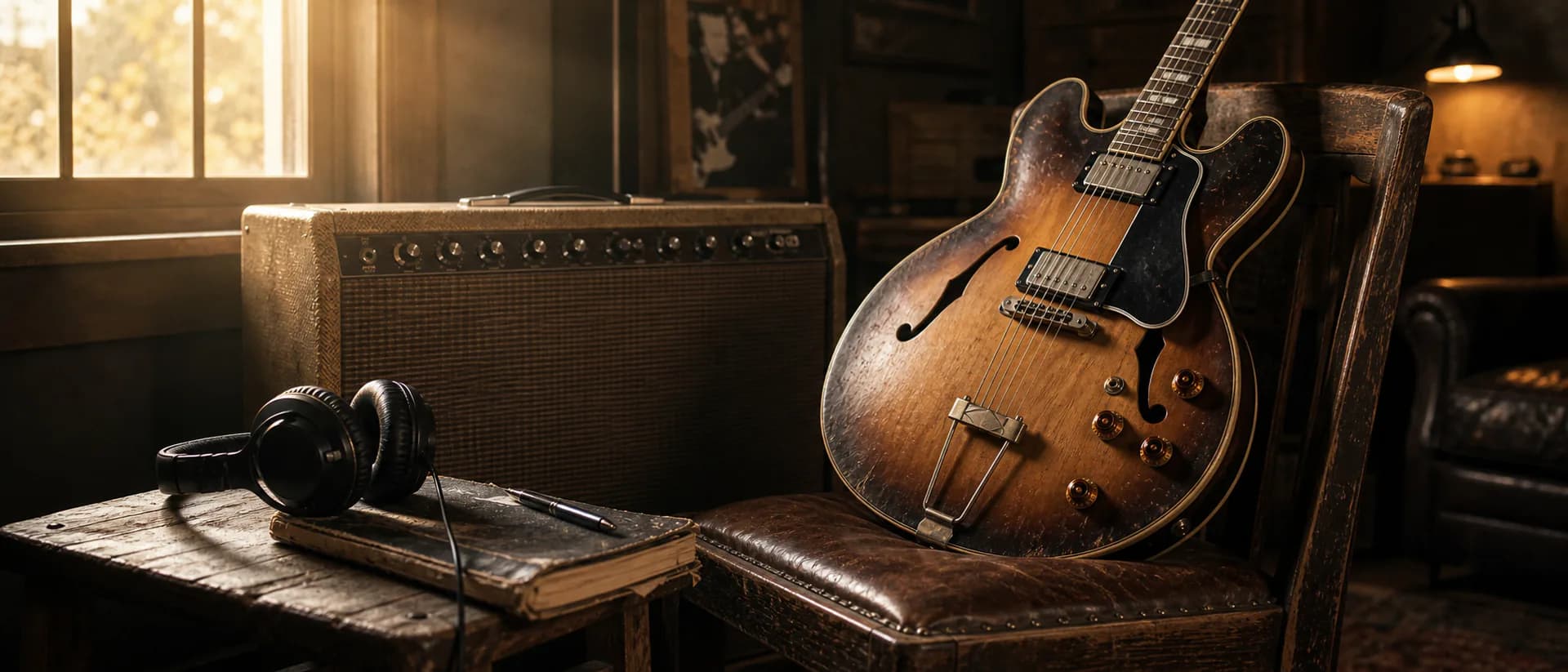
Blues turns a rough story into something you can play at a party. How to choose the tempo, the guitar tone and the lines that carry the whole song.
Create a custom song for someone special
Share the story, pick the style, and turn your memories into a one-of-a-kind song.
Quick answer: A custom blues song is an original blues track built around one person's story, usually 3:00 to 4:30 long and set between 60 and 130 BPM depending on whether it is a slow 12-bar or a shuffle. People commission one for a retirement send-off, a work anniversary, or a memorial gathering.
Most personalized songs try to make the story sound nice. Blues does the opposite — it leaves the hard part in and finds the dignity there. That is why it fits the manager who rebuilt a department after a bad year, the father who worked nights for two decades, the friend who came back from a stretch nobody talks about. It is also why it almost never fits a baby shower.
When is blues the right choice?
When the story has weight and you do not want it smoothed over. Blues suits people whose lives had texture — a long career, a hard chapter, a comeback — and it suits them best if the genre is already in their rotation.
Strongest fits:
- Tributes to someone who came through something — a career rebuilt from scratch, a long recovery, a divorce, a year of debt
- Retirement send-offs for someone who built a shop, a route or a team the hard way
- Tributes to a father or grandfather who grew up on B.B. King, Muddy Waters or Stevie Ray Vaughan
- Thank-you songs after a rough year at work or at home
- Memorial tributes for someone whose life had edges worth naming
- Comeback songs — the "I made it through" brief
Blues is rarely the right call for celebrations of new beginnings: newborns, weddings, first days. Those want a lighter genre. The lineage argument is why blues carries so much: the recordings collected in the Smithsonian Folkways archive trace how the form fed country, rock, R&B and soul, which is exactly why a blues track sounds like the older, plainer version of whatever the recipient already listens to.
Which blues sub-style should you pick?
Name one in the brief, because "blues" alone spans a solo acoustic guitar and a full electric band. The six sub-styles below cover almost every request, and the tempo you choose does more work than any other single instruction.
| Sub-style | Reference artists | Typical BPM | Best for |
|---|---|---|---|
| Slow blues / 12-bar ballad | B.B. King | 60–80 | Memorial and tribute briefs |
| Chicago electric | Muddy Waters, Buddy Guy | 90–115 | City stories, grit, defiance |
| Texas blues | Stevie Ray Vaughan | 110–140 | High-energy send-offs and parties |
| Acoustic / Delta | Robert Johnson, Lightnin' Hopkins | 70–100 | Stripped voice-and-guitar intimacy |
| Soul-blues | Etta James, Joss Stone | 70–95 | Big vocal, polished production |
| Modern blues | Gary Clark Jr., Joe Bonamassa | 95–125 | Younger recipients, contemporary mix |
If you cannot pick, send one reference track instead. A single named song settles tempo, instrumentation and vocal weight in one line.
What makes a strong blues brief?
Facts, not adjectives. Blues lyrics live on specifics — the shift, the truck, the door, the call that came too late — and a brief made of praise gives the track nothing to hold onto.
- The story you want carried. What did this person come through, and what did it cost?
- One central image. Blues uses imagery economically. Pick the object or place that means something.
- The emotional register. Defiant, grateful, mourning, or settled into wisdom.
- Tempo. Slow blues at 60–80 BPM, or an up-tempo shuffle at 110–130 BPM.
- Vocal grit. Smooth or weathered.
- One reference artist.
Anchoring a song to one documented moment is the oldest move in the form — the Songs of America collection at the Library of Congress is largely made of tracks pinned to a single named person, place or day. Your brief works the same way. The full framework is in how to write a custom song brief.
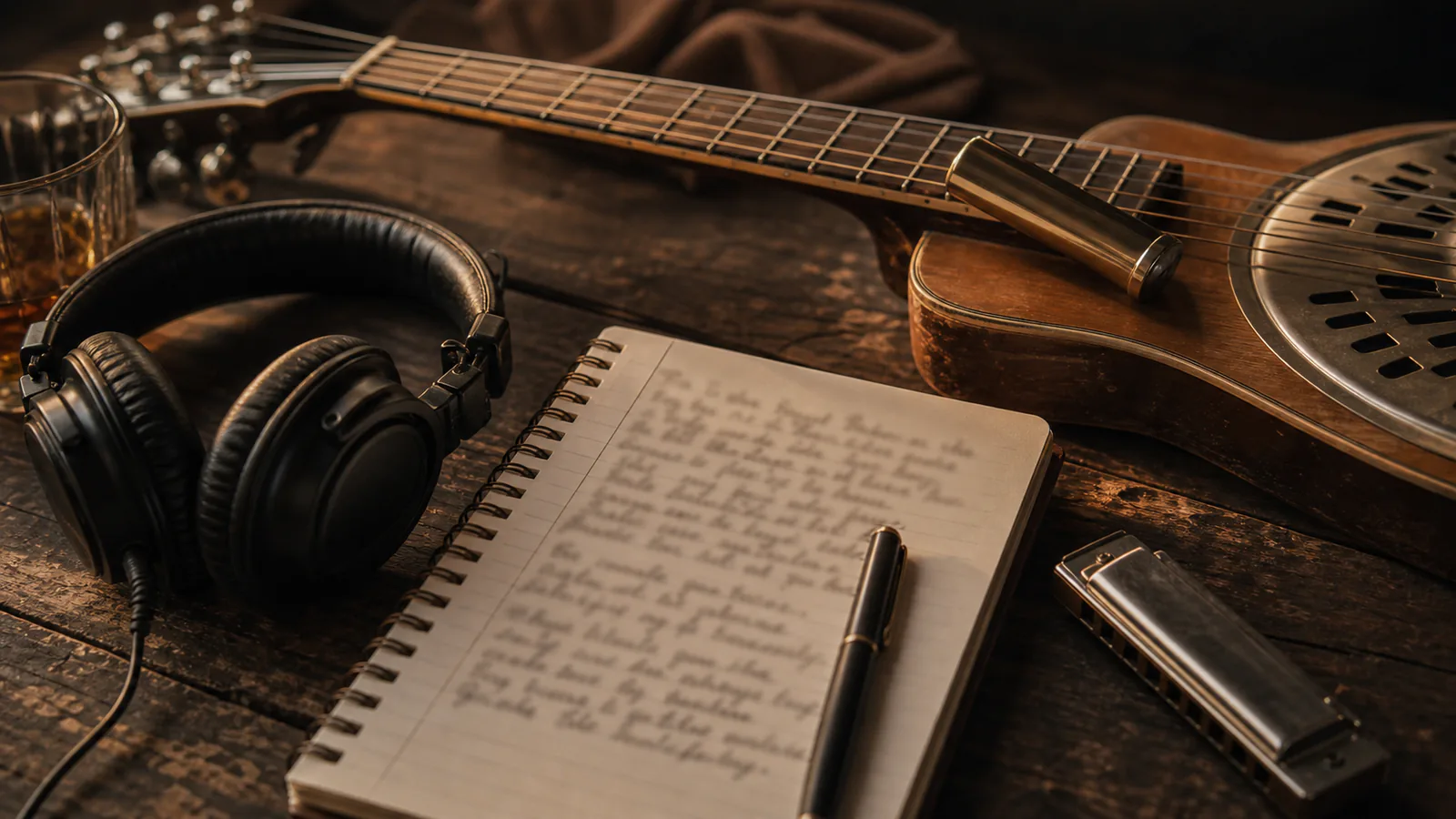
How long should a blues track run?
Three to four and a half minutes, longer than most genres, because blues needs instrumental room. Cut it to 2:30 and the solo disappears, which removes the part people actually replay.
- Tempo: 60–80 BPM for slow blues, 100–130 BPM for a shuffle
- Length: 3:00–4:30
- Structure: 12-bar form most often, sometimes verse-chorus
- Instrumentation: lead guitar, bass, drums, plus optional harmonica, organ or piano
- Vocal: solo lead, intimate dynamics, controlled grit
Where do people actually use blues?
At the moments that mark a long stretch of effort rather than a fresh start. The six below account for most blues briefs that come through.
- A retirement send-off for a manager who ran the same shift for 22 years
- A 25th work anniversary for someone who started in the warehouse
- A thank-you for the partner who covered the bills through a layoff year
- A recovery milestone — one year, five years, ten
- A memorial gathering for someone whose life had texture
- A comeback song for a friend who rebuilt after a bad stretch
What does a custom blues song cost?
Roughly $80 to $300 for most blues briefs, which places it in the mid tier rather than the entry tier. The reason is arrangement time: the format wants a real solo section and a wider mix, and both add production steps.
Full tier-by-tier numbers are in what a custom song costs, and you can compare what each song package includes before deciding where to spend. For how the whole process fits together — brief, lyric draft, revision, delivery — start with the complete guide to custom songs.
What should you say when you order?
Eight lines, plain facts. Paste this into the order form and fill the blanks — this shape is specific to a blues recipient, where the hard chapter and the central image matter more than adjectives.
For: [name], my [relationship], [age or years known]. Occasion: [event], needed by [date]. What they came through: [the hard chapter, one plain sentence]. Central image: [the night shift, the truck, the last key to the shop, the phone call]. Register: [defiant / grateful / mourning / settled]. Sub-style and tempo: [slow blues at 70 BPM, or Texas shuffle at 120 BPM]. Vocal: [smooth or weathered], reference [one artist]. Leave out: [names, topics, anything off limits].
Two more rules for this genre specifically. Give the emotional target before you give any musical instruction, because tempo follows feeling and not the other way around. And name where the track will be played — a song heard through headphones on a quiet evening can stay slow and sparse, while a song played out loud at a send-off needs a faster arrival and a hook people can catch on the first listen.
Frequently asked questions
Can the track include a guitar solo?
Yes, and it is worth asking for by length. Say "eight bars after the second verse" or "a long solo before the last chorus" and the arrangement gets built to it. The track is generated from your written brief rather than tracked by a session player, so the solo you describe is the solo you get — vague requests produce filler.
Can a blues song sound hopeful?
Yes. The genre carries "I came through it" as comfortably as "I am still in it," and the difference sits mostly in the tempo and the last verse. A shuffle at 115 BPM with a resolved final chorus reads as survival. A 65 BPM slow blues that never resolves reads as mourning. Say which ending you want, in those words.
Can blues mix with soul or gospel?
Yes — soul-blues and gospel-blues are established hybrids, not compromises. Both keep the 12-bar bones and add a bigger vocal performance, backing voices and a fuller arrangement. Ask for the hybrid explicitly, name one reference artist, and say whether you want a choir-style backing behind the last chorus or a single voice all the way through.
Does blues work for a younger recipient?
Only if they already listen to it. Blues rewards familiarity — someone who never plays the genre tends to hear the tempo as slow rather than heavy. Modern blues in the 95 to 125 BPM range, closer to Gary Clark Jr. than to Robert Johnson, is the safest bridge. If none of it is in their rotation, pick the genre that actually is.
Who owns the finished track?
The rights you receive are set by the service's terms at checkout, and they vary — personal use is standard, while commercial or broadcast use often is not. Read that section before you plan anything public with the song, and if it will be played at a ticketed event, confirm in writing first. The U.S. Copyright Office explains what copyright covers.
Related reading: a personalized jazz track for a smoother room, country as the storytelling alternative, and rock when the brief needs volume instead of weight.
Ready to commission yours? Start your custom blues song here and write the hard part into the brief — that is the part the genre is built to carry.
About the Author
HosannaSong Team
The HosannaSong team helps people turn meaningful stories into custom songs. We write about personalized music, songwriting, and the craft of giving a track that lasts.
View ProfileCustom Jazz Song: How to Get a Personalized Jazz Track Made
Custom Classical Song: How to Get a Personalized Piece Composed
Related Articles
Custom Jazz Song: How to Get a Personalized Jazz Track Made
Read Article
Custom Country Song: How to Get a Personalized Country Track
Read Article
Custom Rock Song: How to Get a Personalized Rock Track Made
Read ArticleTurn this story into a custom song.
Answer a short brief, choose the style, and get a personalized song made to move the person you love. Start while the memories are still fresh.
Create My Song Now